Choosing a Christian Speaker for Women's Events: Seeking a Sacred Narrative

What if the most profound moment of your next retreat isn't found in a high-energy keynote, but in the quiet, sacred exhale of a woman finally feeling seen? We've all felt the exhaustion of events that offer plenty of polish but very little soul. You carry the weight of choosing a christian speaker for women's events who can do more than just entertain a crowd. It's a heavy responsibility. You're seeking more than a personality. You're looking for a guide who can witness the quiet, internal landscapes of the women in your care with a sense of calm understanding.
You likely agree that your community is tired of surface-level platitudes that fail to reach their deepest wounds. They need substance. They need to know that their histories are honored and their stories are heard. This article will show you how to identify a speaker who prioritizes sacred narratives over simple encouragement to offer deep spiritual formation. We'll explore how to move beyond a temporary emotional high toward a sense of integrated wisdom. This is the path to creating a gathering that feels like a shared journey rather than just another date on the calendar.
Key Takeaways
Learn to shift from seeking entertainment to inviting sacred accompaniment, ensuring your event resonates with a frequency of deep spiritual formation.
Identify a christian speaker for women's events who honors the complexity of personal history and leaves room for the quiet shadows in our stories.
Discover the transformative potential of Storywork, where the intersection of theology and narrative helps women re-author their lives with renewed hope.
Master the art of curating a "sacred exhale" by balancing teaching with intentional moments of silence and internal integration.
Gain insights into facilitating a retreat that feels like a shared journey, fostering a sense of being seen and heard within a community of faith.
Table of Contents
The Search for Depth: Why Your Choice of Speaker Defines the Sacred Space
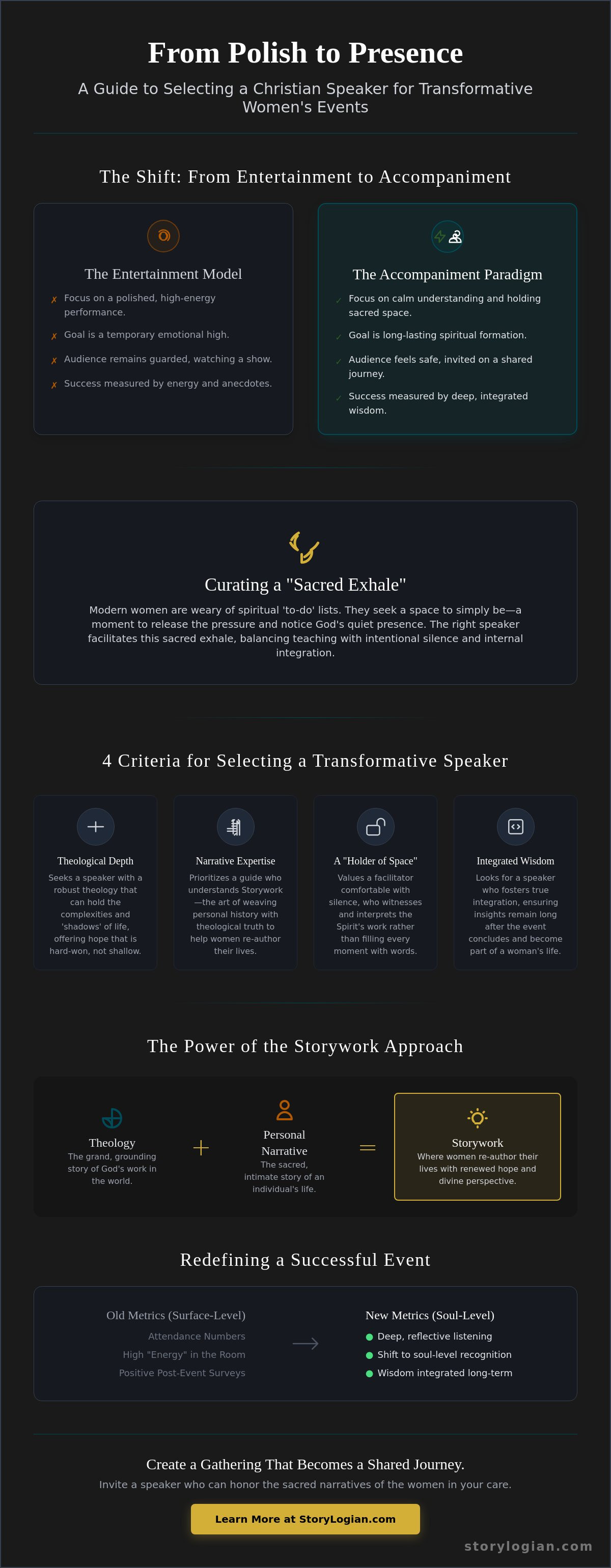
The choice of a christian speaker for women's events is a quiet act of curation. It is the moment you decide whether your gathering will be a performance to be watched or a sanctuary to be entered. For years, the metric of success in ministry was often energy. We looked for the dynamic keynote, the one who could move a room with a punchy anecdote and a polished smile. Yet, something has shifted in the collective heart of the church. Women are no longer seeking to be entertained. They are seeking to be accompanied. This transition from entertainment to accompaniment marks a return to a more ancient, reverent way of being together.
A speaker does not just deliver a message; they set the emotional and spiritual frequency of the entire room. If the speaker is hurried, the room becomes restless. If the speaker is performing, the audience remains guarded. However, when a facilitator enters the space with a sense of calm understanding, the atmosphere shifts toward safety. This is the difference between an inspirational talk that offers a temporary emotional high and a contemplative facilitation that invites long-lasting spiritual formation. Modern women are increasingly trading productivity-based faith for soul care. They don't want another list of spiritual chores. They want to be reminded that their internal landscape is a place where God is already present, waiting to be noticed.
The Longing for a Sacred Exhale
There is a quiet weariness in the pews today. It is a fatigue that cannot be solved by another three-point plan for a better life. This weary soul demographic is looking for a sacred exhale. When you select a christian speaker for women's events, look past the labels of dynamic or high-energy. Seek the one who is comfortable with silence. A true guide acts as a holder of space. They are not there to fix a problem or provide a quick solution. Instead, they witness and interpret the process of the Spirit within the lives of the attendees. This allows the internal journeys of the women to unfold at a natural, unhurried pace.
Evaluating Impact Beyond the Podium
Measuring the fruit of a retreat requires a different kind of vision. Attendance numbers tell us very little about the deep architecture of a soul. To evaluate true impact, we must look toward the slow work of spiritual formation. This involves a deep appreciation for the historical roles of women in the church and how those narratives continue to shape our present identities. When a speaker practices the sacred art of storytelling, they invite the community into a shared vulnerability. It is here that theological depth meets personal history. Success is found in:
The presence of deep, reflective listening among the attendees.
A shift from surface-level connection to soul-level recognition.
The integration of wisdom that remains long after the event concludes.
A speaker's theological grounding must be robust enough to hold the shadows of our stories, ensuring that the hope offered is not shallow, but hard-won and integrated.
Criteria for Selecting a Christian Speaker for Women's Events
Choosing a christian speaker for women's events requires a discerning heart. It isn't merely about finding a voice that resonates; it's about finding a spirit that can hold the weight of the room. When you begin your search, look for a speaker whose view of God is expansive enough to leave room for the shadows. If their message only allows for victory and light, those carrying unspoken grief may feel invisible. This tradition of women as keepers of sacred space is as old as the early Christian communities, where faith was often nurtured through deep, personal connection and shared vulnerability.
The ideal candidate should possess narrative expertise. They need to understand how the threads of our individual lives are woven into the larger tapestry of God's work. You might look for someone who can offer narrative theology explained in a way that feels like a homecoming. This expertise allows them to bridge the gap between ancient text and modern ache. Beyond this, prioritize relational safety. A speaker who demands performance or high-energy participation may inadvertently shut down the very vulnerability required for healing. Seek those with a background in soul care, such as spiritual direction or sacred accompaniment, as they are trained to listen for the movement of the Spirit rather than just the sound of their own voice.
The Difference Between a Teacher and a Guide
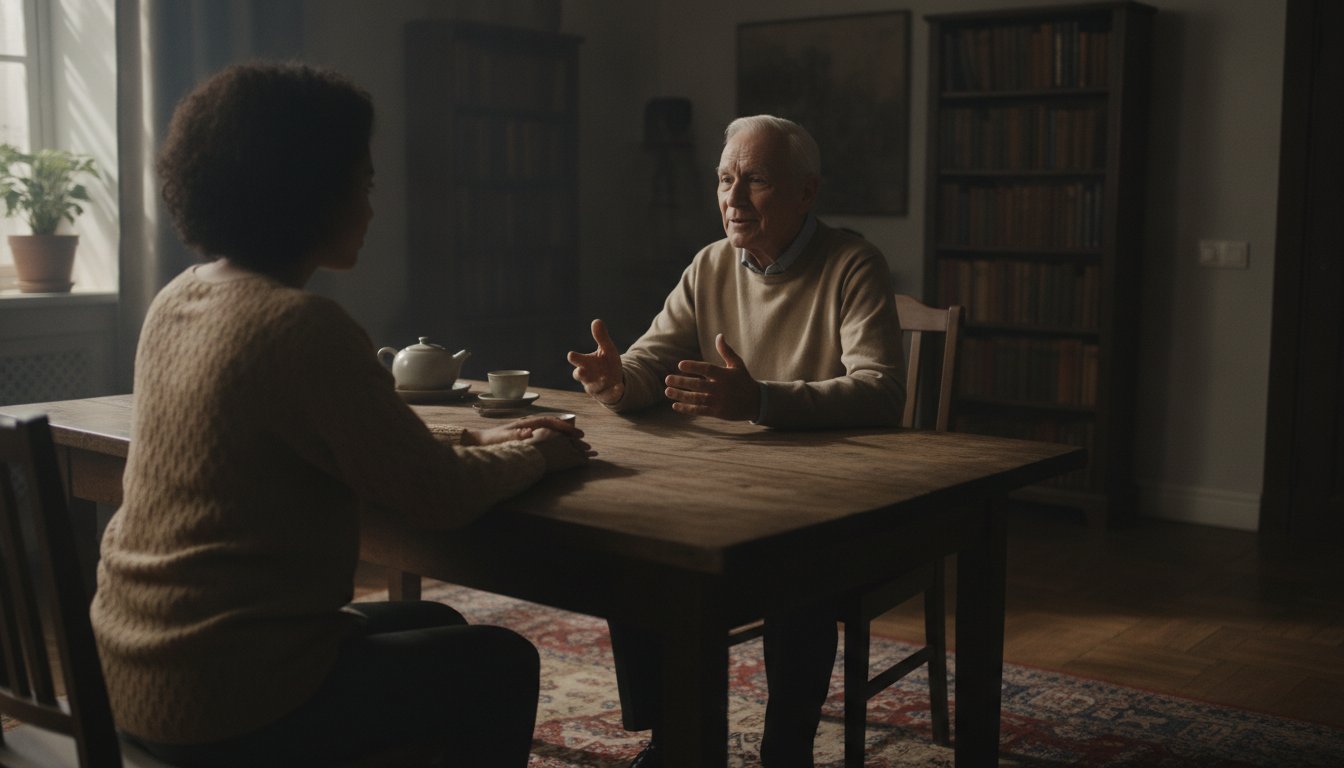
A teacher imparts information; a guide invites transformation. While a teacher might follow a rigid script, a guide remains attentive to the room. They possess the rare ability to pivot when they sense a collective need for silence or prayer. This skill is central to the art of spiritual formation. It ensures that the retreat facilitator is not just a lecturer, but a companion on the journey. They don't just speak at the crowd; they witness the process unfolding within it.
Questions to Ask During the Selection Process
Before finalizing your choice, engage in a dialogue that moves beyond logistics. Consider asking these questions:
How do you handle the "unspoken" stories of pain or doubt that often linger in a room?
What is your approach to finding God in my story when that narrative includes seasons of harm or silence?
Can you provide a contemplative framework that helps our breakout sessions feel like a continuation of the sacred space?
A speaker who can answer these with gentleness and depth will likely be a true vessel for spiritual formation. If you are seeking a voice that bridges the gap between theology and personal history, exploring
focused on storywork can offer the depth your community craves.
The Storywork Approach: Transforming Events into Healing Intensives
Storywork is not a lecture; it is a sacred invitation to witness. It exists at the intersection of the structural eye of a filmmaker, the depth of theology, and the gentle presence of spiritual direction. While many organizers seek a christian speaker for women's events to provide a spark of inspiration, the storywork approach offers something more enduring. It is a process of reclamation. Unlike traditional motivational speaking, which often aims to propel an audience forward with high-energy advice, storywork sessions invite women to slow down and look back. This is where we find the "Sacred Thread" that has been weaving through their lives since the beginning. By naming the story, we identify the specific intersections of harm and grace, allowing for a more integrated sense of self.
Traditional "testimonies" in church settings can sometimes feel like finished products, polished and wrapped in a bow. They focus on the resolution. In contrast, a spiritual autobiography is a living document of healing that acknowledges the complexity of the journey. When choosing a leader for your next gathering, applying rigorous Criteria for Selecting a Speaker ensures you find someone who doesn't just share their own narrative, but helps others interpret theirs. This is why a christian speaker for women's events who specializes in storywork is so vital. They act as a mirror, reflecting the divine presence already active in the reader's own history.
Why Narrative Healing Matters Now
Many women carry the quiet weight of "church hurt" or spiritual trauma. These wounds require a gentle approach that honors personal agency and moves at a pace of safety. Narrative healing provides this by viewing each person as the primary author of their experience. Dr. Shonda Carter utilizes her background as a filmmaker to help women "visualize" their spiritual growth. She helps them see their lives not as a series of random events, but as a purposeful narrative arc. This perspective helps weave together fragmented histories into a cohesive story of redemption and hope.
Integrating Storywork into Your Event Schedule
To transform a standard event into a healing intensive, the schedule must mirror the re-authoring process. This involves balancing periods of deep input with intentional space for integration. Using the practice of writing your spiritual autobiography as a communal exercise can be profoundly moving. Sessions shouldn't just end with a closing prayer. They should lead into "holy listening" groups where women can practice witnessing one another's stories without the pressure to offer advice or fixes. This rhythm creates a sense of sacredness that lingers long after the final session concludes.
Planning a Soul-Care Focused Event: A Practical Guide
Planning a retreat is more than a logistical exercise. It is a quiet act of hospitality for the soul. Before you settle on a theme or a color palette, define the "Sacred Intent" of the gathering. Ask yourself: what is the one thing you want a woman's heart to hear when the noise of the world finally fades? This intent becomes the compass for every decision, especially when choosing a christian speaker for women's events. You need a leader who recognizes that the most important work often happens in the margins of the schedule, where the Spirit finds room to breathe.
A soul-care focused event requires a specific rhythm. It must balance deep, narrative input with periods of intentional integration. Many organizers make the mistake of over-scheduling, leaving no room for the internal journey to unfold. A speaker who understands the architecture of silence will not feel the need to fill every moment with their own voice. They respect the pause. They know that truth needs time to settle, like sediment in a glass of water, before clarity can emerge. Prepare the vessel of your event by considering the atmosphere, lighting, and the presence of contemplative prompts that invite women to linger in the presence of God.
Creating a Contemplative Atmosphere
The unhurried soul needs a slow-paced environment. When the schedule is packed, the heart remains guarded and busy. Consider using music and visual media, such as quiet documentary footage, to enhance the narrative experience. This helps shift the focus from the speaker's personality to the reader's own internal landscape. To support this movement, you might provide a contemplative prayer guide for your attendees. This resource offers a structured way to engage with silence, turning a simple break into a profound moment of spiritual formation.
The Role of the Facilitator in Small Groups
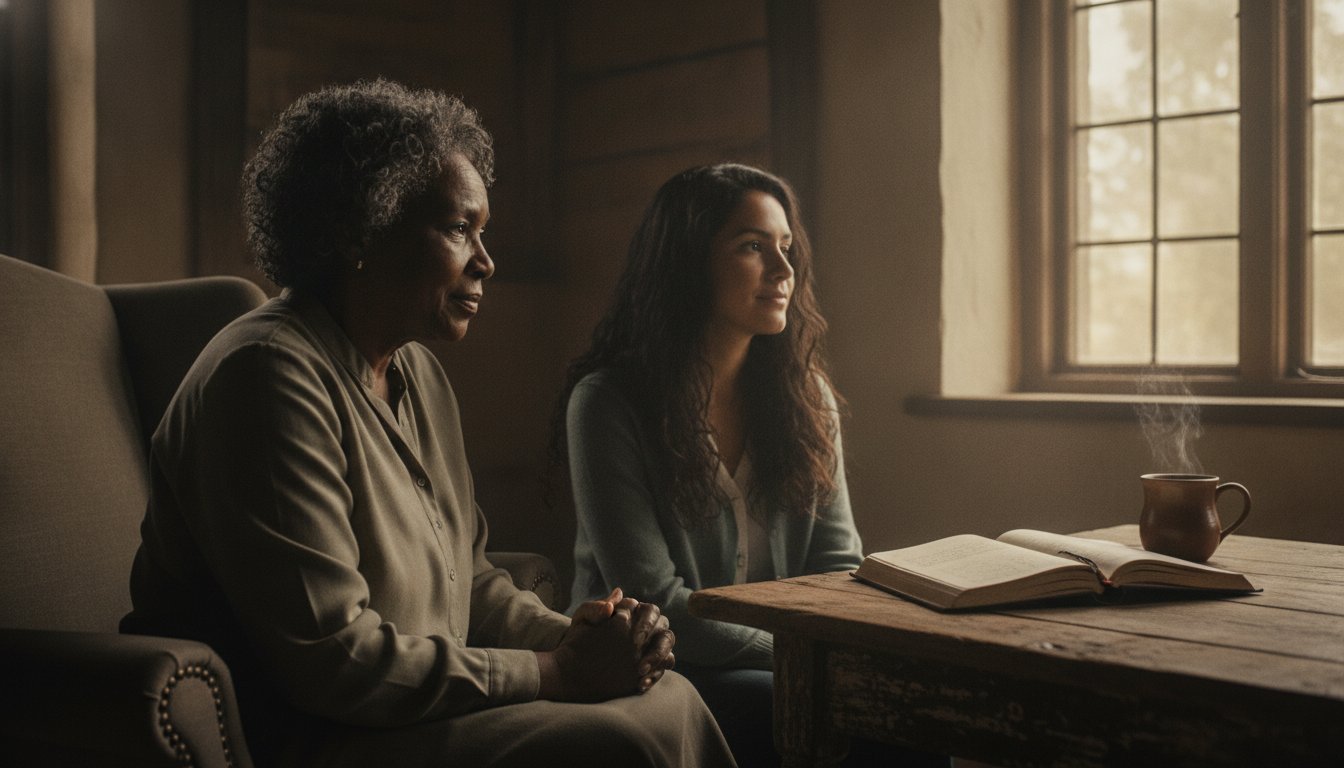
Small groups are the heart of a healing intensive. Train your local leaders to act as sacred companions rather than teachers. Their role is to witness, not to fix. Provide prompts that encourage deep listening and the honoring of personal history. When a woman shares her story, the goal is for her to feel that she is standing on holy ground. This environment of safety allows the work of the christian speaker for women's events to take root and grow. To ensure the journey continues after the final session, follow up with resources that support ongoing narrative healing. If you are ready to curate a space of profound depth, you can explore our Spiritual Formation Retreats to find a guide for your next gathering.
Collaborating with StoryLogian: Inviting Dr. Shonda Carter to Your Event
Choosing a christian speaker for women's events is an act of profound trust. You aren't just booking a time slot on a calendar. You're inviting a guest into the inner lives of your community. Dr. Shonda Carter approaches the podium not as a performer, but as a spiritual director who holds space for the unspoken. Her unique background blends the structural precision of filmmaking with the depth of theology and the gentle presence of soul care. This combination allows her to see the narrative arc of a life with clarity and compassion. It is a way of looking that honors both the light and the shadow in every history.
Every community has its own rhythm and its own quiet aches. For this reason, Dr. Carter focuses on co-creating a christian storywork retreat that reflects your specific needs. She brings the perspective of sacred accompaniment to the stage, ensuring that the message isn't just heard, but felt and integrated. The goal is always the same: to move from a state of quiet unrest toward a sense of integrated wisdom. This isn't a transactional interaction. It's a shared journey toward wholeness.
Speaking Topics and Custom Curriculum
The curriculum is designed to be a living thing. Topics like "The Sacred Art of Storytelling" or "Soul Care for the Weary Leader" serve as starting points for deeper exploration. Because of her experience in filmmaking, Dr. Carter uses a visual dimension that helps women see their spiritual growth in new ways. We can develop a narrative-based workshop that fits perfectly within your retreat’s timeline. Whether it’s a single keynote or a multi-day facilitation, the focus remains on uncovering the sacred thread within each participant's history. This helps transform a standard gathering into a place of deep listening and discovery.
Booking and Facilitation Logistics
The process of collaboration is intentional and unhurried. We’ve streamlined the logistics for ministry teams to ensure the focus remains on the spiritual formation of the attendees. During the planning phase, we spend time listening to the heart of your organization. We want to understand the stories that have shaped your people before the first word is spoken from the stage. Our commitment is to honor the individual narratives within your organization. The next step is a discovery call. This is a space to explore how we can co-create an atmosphere of safety and sacredness together. It is an invitation to begin a process of witnessing and interpretation that will leave a lasting impact on your community.
Reclaiming the Sacred Thread of Your Community
The journey toward a transformative retreat begins with a single, intentional choice. You've explored the shift from mere entertainment to true sacred accompaniment. You now understand that the architecture of silence and the depth of narrative theology are the foundations of a sacred exhale. By prioritizing soul care over productivity, you invite the women in your care to witness the divine thread in their own histories. This is the work of spiritual formation, a slow and beautiful process of coming home to one's own life.
Choosing the right christian speaker for women's events is the catalyst for this healing. Dr. Shonda Carter, a theologian and filmmaker with national facilitation experience, specializes in the delicate art of storywork and soul care. Her approach ensures that your gathering isn't just an event, but a shared journey toward integrated wisdom. We invite you to Invite Dr. Shonda Carter to facilitate a sacred narrative experience at your next event. Together, we can curate a space where every woman feels truly seen and heard. May your next gathering be a sanctuary of peace and a testament to the power of a story well-told.
Frequently Asked Questions
What is the difference between a Christian speaker and a Spiritual Director?
A traditional speaker typically addresses a crowd with a predetermined message intended to inspire or inform. In contrast, a Spiritual Director is trained in the art of holy listening, focusing on the movement of the Spirit within an individual soul. When you seek a christian speaker for women's events who also functions as a director, you receive a guide who prioritizes the internal journey of the attendees over the performance on the stage.
How do I know if our women's group is ready for a 'Storywork' intensive?
Your community is likely ready when there is a shared sense of "event fatigue" and a collective longing for something deeper than surface-level encouragement. If the women in your care are expressing a desire to reconcile their past or find God in the quiet shadows of their lives, they are prepared. Storywork requires a foundation of safety and a willingness to move toward vulnerability at an unhurried pace.
Can a contemplative speaker work for a large conference with hundreds of attendees?
Yes, a contemplative approach can be profoundly effective even in large settings by intentionally shifting the atmosphere from performance to presence. A skilled facilitator uses silence, rhythmic pacing, and thoughtful prompts to create an intimate environment. This allows each woman to feel seen and heard within her own story, regardless of the number of people sitting in the room with her.
What are the common themes covered by a Christian speaker for women's events?
Common themes often center on spiritual formation, narrative healing, and the sacred art of storytelling. Rather than focusing on productivity or "fixing" problems, these messages explore the integration of personal history with divine grace. Topics like "Soul Care for the Weary" or "Naming the Sacred Thread" help women move from a state of quiet unrest toward a sense of integrated wisdom and peace.
How far in advance should I book a speaker for a women's retreat?
Booking six to twelve months in advance is generally recommended to allow for a slow and deliberate co-creation process. This lead time ensures that the speaker and the ministry team can pray together and define the "Sacred Intent" of the event. It allows the curriculum to be tailored specifically to the internal landscape and the unique spiritual needs of your particular community of women.
What is 'Sacred Accompaniment' in the context of a speaking engagement?
Sacred Accompaniment is the practice of walking alongside others as they navigate their internal spiritual journeys. When a christian speaker for women's events prioritizes this, they are not just delivering a talk. They are witnessing the process of the Spirit within the room. They act as a holder of space, comfortable with the complexity and the unspoken elements of the human experience that emerge during a gathering.
Do you provide materials or workbooks for the attendees to use during the event?
Yes, curated materials such as contemplative prayer guides or spiritual autobiography workbooks are often provided to facilitate deep integration. These resources serve as quiet companions for the attendees, offering a structured way to engage with the silence and reflection invited during the sessions. They help ensure that the insights gained during the event settle into the heart and produce long-lasting spiritual formation.
How can we integrate Dr. Shonda Carter’s filmmaking work into our event?
Integration often occurs through the use of visual storytelling or short documentary elements that complement the narrative teaching. Dr. Carter’s filmmaking background allows her to "visualize" spiritual concepts, helping attendees see the narrative arc of their lives through a cinematic lens. This adds a unique visual dimension to the sessions, honoring the beauty and complexity of each woman's individual history in a deeply resonant way.

Comments