Online Spiritual Direction for Women: A Guide to Choosing Sacred Accompaniment

What if the most sacred text you ever read was the one currently being written across the pages of your own life? Your story is not a distraction from your faith. It is the very soil where God is moving. You likely know the ache of being unheard in traditional pews or the heavy exhaustion of a life spent caregiving until your own spirit feels thin. It's a common burden. Finding a guide who truly understands the nuances of your narrative can feel impossible when local options don't align with your soul's needs. Seeking online spiritual direction for women allows you to bridge that gap. It offers a way to invite a wise companion into your private world without leaving the comfort of your home.
You deserve a "soul friend" who views your history as holy ground. In this guide, we will explore how to choose a sacred accompaniment that focuses on the art of storywork. You'll learn what to look for in a director who prioritizes deep listening and how to establish a contemplative practice that sustains you. We'll walk through the process of finding clarity in your past so you can breathe more deeply in your present. Together, we will discover how to honor the sacredness of your journey.
Key Takeaways
Recognize the invitation to slow down and find a digital sanctuary that honors your unique path through sacred accompaniment.
Discern the vital qualities of a guide who practices deep listening and understands the specific rhythms of your spiritual development.
Uncover the power of storywork within online spiritual direction for women to transform your personal history into a source of integrated wisdom.
Establish simple threshold rituals and physical comforts to transform your home into a quiet space for deep reflection.
Learn how a narrative-focused approach to your soul's journey can lead you from a state of unrest toward a sense of quiet, grounded peace.
Table of Contents
The Quiet Invitation: Why Modern Women Seek Online Spiritual Direction
There is a soft, persistent knock at the door of the heart. It often comes when the noise of the world is loudest. For the woman balancing the weight of ministry, the demands of a career, and the intricate needs of a home, this knock is an invitation to stop. Spiritual direction is not another task on a list. It is sacred accompaniment. It is the gift of a non-anxious presence. Instead of seeking a coach to fix your problems, you find a guide to witness the slow, beautiful process of your soul's formation. This is a journey of discovery, not a project of repair.
The shift toward digital sanctuaries is not a compromise. It's a response to a modern reality. Many women find that their local settings lack guides who understand the specific theological or narrative pressures of female leadership. Seeking online spiritual direction for women creates a bridge. Technology, often the source of our distraction, becomes the very tool that allows us to cultivate an unhurried soul. It transforms a laptop screen into a thin place where the sacred meets the ordinary. You don't need to travel to a distant monastery to find God. The sanctuary is right where you are.
We often believe that for an experience to be holy, it must be inconvenient. We think we must drive miles to a retreat center or sit in a drafty church basement. But the unhurried soul knows that God is not confined by geography. By choosing a digital path, you reclaim your time. You prioritize the internal landscape over the external journey. This accessibility ensures that the practice of reflection becomes sustainable, fitting into the cracks of a busy life without adding to the burden of "doing."
The Need for Sacred Space in a Noisy World
Our days are often fractured. We move from emails to school runs to ministry meetings without a breath in between. Online direction provides a deliberate pause. It's a hallowed moment carved out of a professional routine. In this space, you aren't expected to perform. You find a guide who holds space for the unspoken; the doubts that linger after a sermon or the fatigue that follows a day of caregiving. The focus shifts from "fixing" to "witnessing." You're no longer alone in the processing of your spiritual formation.
Overcoming the Distance: The Intimacy of Digital Direction
There is a unique intimacy found in the digital glow. While physical distance remains, the focus often deepens. Without the distractions of a public coffee shop or an unfamiliar office, eye contact becomes intentional. You're in your own sanctuary. This physical safety allows for a deeper vulnerability. You can speak the hard truths of your story while sitting in your favorite chair, holding a warm mug. Because there is no commute, the transition back to daily life is gentle. You have the immediate freedom to sit in silence or reach for your journal; allowing the session's wisdom to settle before the world rushes back in.
Choosing Your Guide: Essential Criteria for Spiritual Discernment
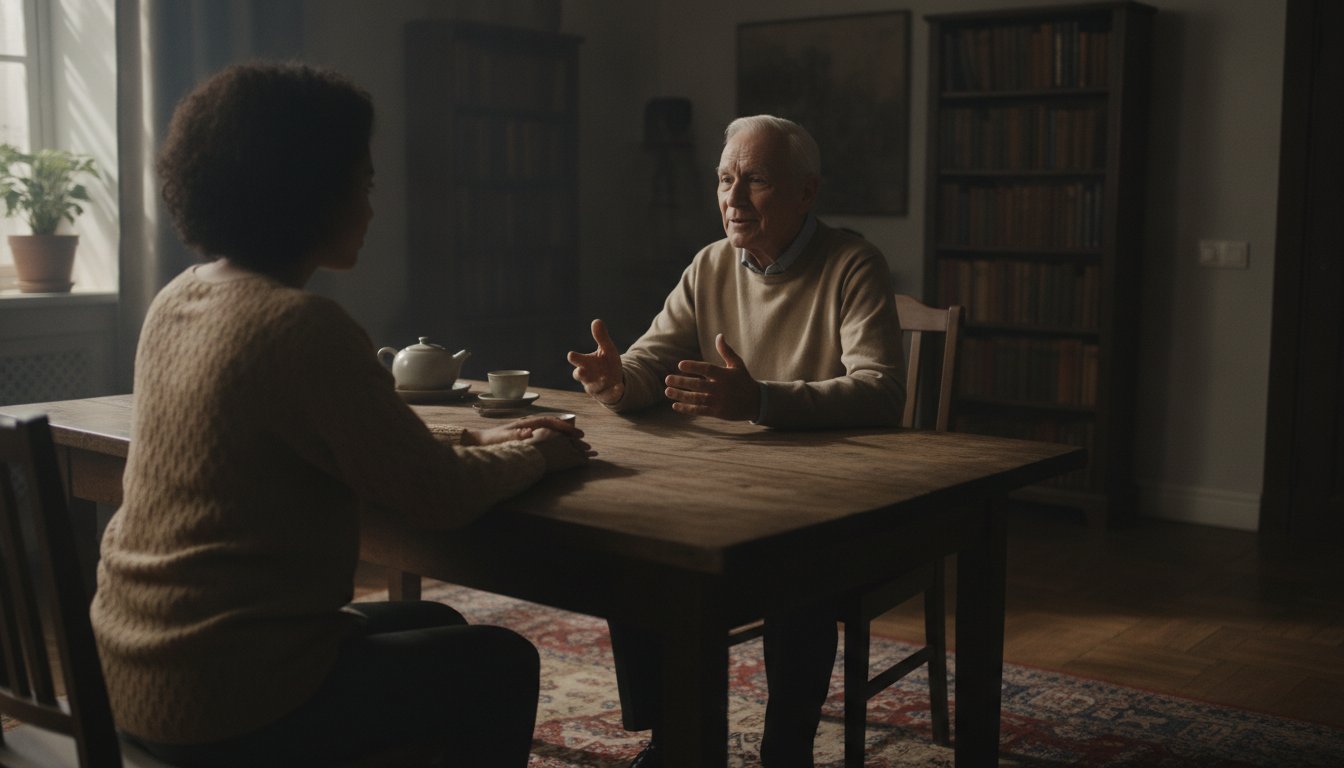
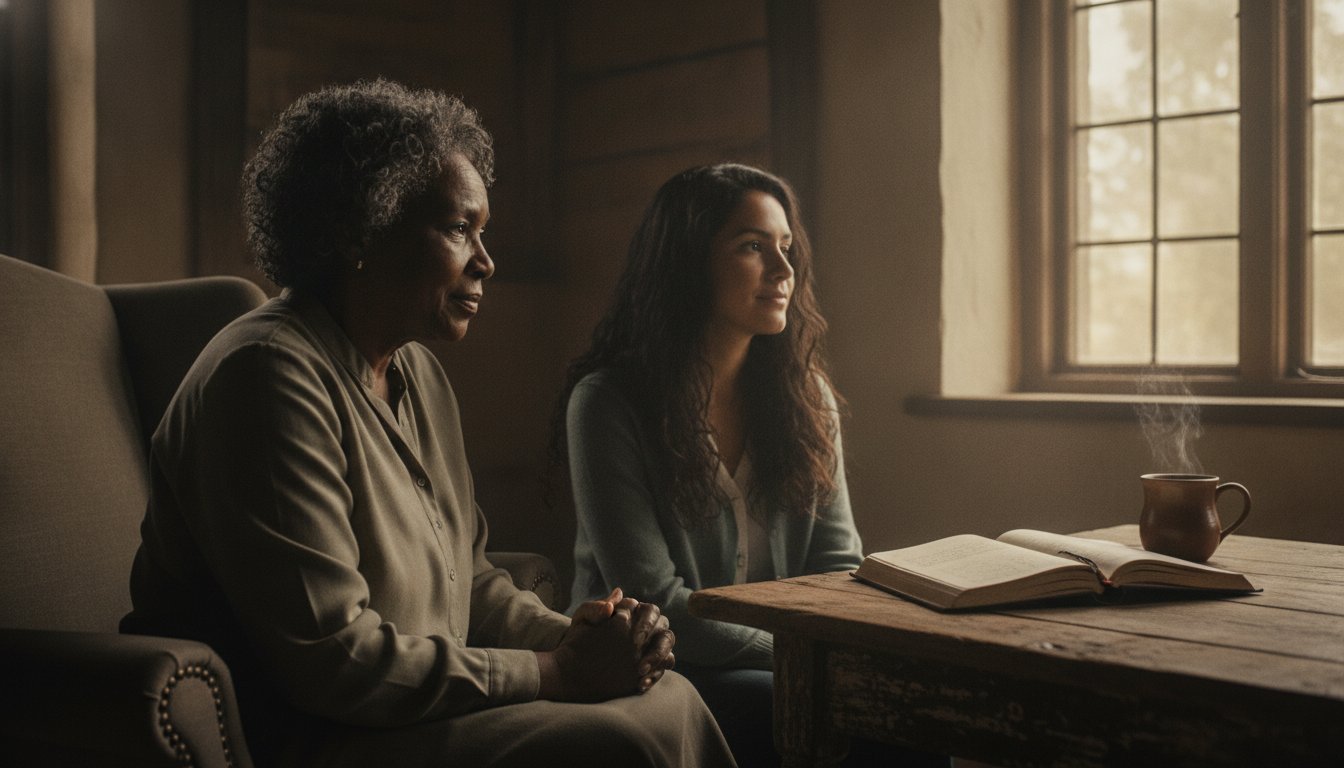
Finding a spiritual director is not like hiring a consultant. It's more akin to recognizing a kindred traveler on a long, winding road. You're looking for a "soul friend." This person doesn't lead from the front. They walk beside you. When seeking online spiritual direction for women, the search is an act of discernment. It's about finding someone who embodies humility and theological breadth. A wise guide knows they aren't the primary actor in the room; the Spirit is. They offer a non-anxious presence that invites you to exhale. They encourage you to slow down. They wait for the silence to speak.
The right guide possesses narrative empathy. This is the ability to see the divine thread woven through the messy, often confusing tapestry of your life. They don't just listen to your words. They listen for the "God-movement" beneath them. They are comfortable with complexity and the unspoken elements of your experience. They don't rush to provide answers. Instead, they help you ask the questions that lead to integrated wisdom. They honor your autonomy, acting as a holder of space rather than a fixer of problems.
Spiritual Direction vs. Clinical Therapy: Knowing the Difference
Therapy and spiritual direction often walk parallel paths. Yet, their destinations differ. Therapy often looks at the "why" of the past to heal the psyche. Direction looks at the "where" of the present to notice God. While a mental health professional is vital for crisis or clinical trauma, a spiritual director acts as a companion for the soul's formation. They use prayer and discernment as their primary tools. Knowing which guide you need depends on whether you're seeking to resolve a clinical symptom or to deepen your interior life.
The Importance of Narrative Alignment
Your life is a sacred text. Every chapter, even the ones marked by "church hurt" or long seasons of silence, holds a divine thread. A director who values narrative alignment won't ask you to skip the difficult parts. They help you reclaim your faith story by looking for themes of glory and harm. Ask a potential guide how they hold space for trauma. Ask if they are comfortable with the questions that traditional settings might ignore. If you feel a pull toward this kind of deep, story-focused work, you might consider exploring sacred accompaniment to see if the rhythm resonates with your heart.
The Storywork Distinction: Finding Healing in Your Narrative
Your life is not a series of scattered events. It's a carefully composed narrative where every shadow and every light serves a deeper purpose in your spiritual formation. While traditional guidance might focus on external behaviors, Storywork looks deeper. It's the practice of looking at the chapters of your history with a kind of holy curiosity. In the context of online spiritual direction for women, this modality becomes a powerful tool for integration. It identifies the themes of harm that have quieted your voice and the themes of glory that reveal your true name. You aren't just telling a story; you're discovering the divine thread that has been there all along.
In these sessions, the director acts as a narrative witness. Imagine your life as a documentary currently in production. A witness doesn't edit the film or demand a rewrite. Instead, they sit beside you in the screening room, helping you notice the subtle nuances you might have missed. They help you name the truth of what has happened to you. This naming is the first step toward spiritual freedom. When you can look at your history without flinching, you begin to see that God was never absent. He was co-authoring the story, even in the silent spaces between the lines.
Healing from Church Hurt and Spiritual Burnout
For many, the ache of spiritual dryness isn't a lack of faith. It's a response to past harm. When you've spent years in service, the weight of institutional expectations can crush the spirit. True soul care for ministry leaders requires a narrative-first approach. It's about identifying where the "burnout" is actually a wound that needs tending. By re-authoring your history through a lens of grace, you can move away from the pressure to perform and return to the simple joy of being known. You're allowed to be more than what you do for the church.
Integrating Theology and Personal History
Theology is often taught as a set of abstract doctrines. But your "ordinary" days are the primary location of God's activity. Embracing narrative theology means believing that your kitchen table, your workplace, and your quietest moments are sacred sites. You don't have to leave your personal history at the door to find the Divine. Instead, you bring your whole self to the conversation. Moving from abstract belief to lived experience allows your faith to become something you breathe rather than something you merely study. It becomes a shared journey toward wholeness.
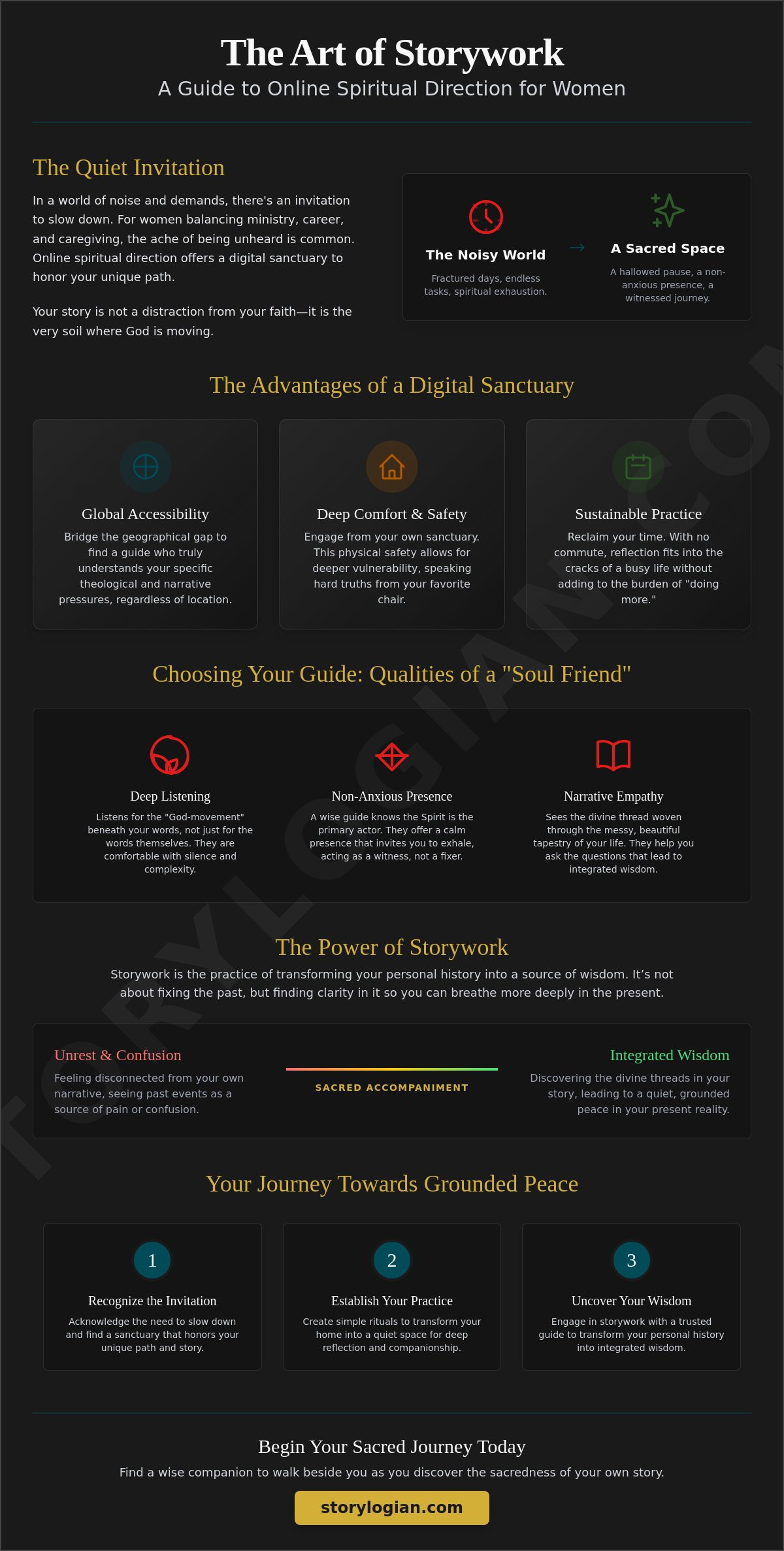
The Architecture of Silence: Preparing for Online Direction
Approaching a digital screen for a soul-tending session requires a shift in perspective. It's not a video call. It's an appointment with the Divine. When we engage in online spiritual direction for women, the device is no longer a tool for productivity. It becomes a window into a thin place. To honor this, we must build an architecture of silence around the experience. This begins with a threshold ritual. You might light a single candle, pour a cup of tea, or simply sit in stillness for five minutes before the connection begins. These small acts tell your nervous system that the work of the world has paused and the work of the soul has begun.
Physical comfort is not a luxury; it is a prerequisite for deep listening. If your body is tense or your environment is cluttered, your spirit will struggle to settle. Choose a seat that supports you. Adjust the lighting so it feels soft and inviting. Beyond the physical, technical preparation acts as a guardian for your privacy. Ensure your connection is stable to prevent "soul-interruptions" where a frozen screen breaks a moment of profound insight. By tending to these details, you create a container that can hold the weight of your story with dignity and grace.
Creating a Digital Sanctuary
Transforming your room into a sanctuary doesn't require a renovation. It requires intention. Use headphones to create an "auditory cloister." This simple step shuts out domestic noise and ensures that your words remain entirely private. Before you click the link to join, engage in a brief moment of contemplative prayer to center your heart. This practice helps you arrive fully present, leaving the fragmented energy of your daily tasks at the door. You aren't just logging on; you're stepping into a hallowed space.
What to Bring to the Session
Come to the session with a physical journal and a pen. There is a sacred connection between the hand and the heart that digital typing cannot replicate. Use it to capture "God-whispers" or recurring themes that emerge during the conversation. Most importantly, bring a "holy curiosity" rather than a rigid agenda. A good director will use silence as a tool. Don't feel the need to fill every gap with words. Let the silence breathe. It's often in the quietest moments that the most significant truths are finally heard. If you're ready to begin this intentional practice, you can schedule a Storywork Session to start your own journey of sacred accompaniment.
When the session ends, resist the urge to jump immediately back into work or household chores. The "after-space" is just as vital as the session itself. Give yourself ten minutes to remain in the silence. Walk outside. Sit with your notes. Let the wisdom settle into your bones before the world rushes back in. This slow transition honors the work you've done and allows the insights to take root in your daily life.
Beginning Your Sacred Journey with StoryLogian
The journey begins with a choice. A simple yes to the quiet voice within. Finding the right space for online spiritual direction for women is about more than scheduling a call. It's about finding a sanctuary where your history is handled with the reverence it deserves. At StoryLogian, Dr. Shonda Carter offers a unique intersection of disciplines, blending the precision of a filmmaker with the depth of a theologian. She doesn't just listen to your words; she watches for the cinematic arc of your life, helping you identify the themes of grace that have been playing in the background all along. This is Sacred Accompaniment. It's a shared movement toward wholeness.
For those in leadership or those healing from spiritual trauma, the need for a safe witness is paramount. You've spent years holding space for others, often at the expense of your own internal peace. Here, the weight is shared. Your story is treated not as a problem to be solved, but as a sacred text to be interpreted with care. In this contemplative space, the noise of ministry demands and professional expectations falls away, leaving room for the unhurried work of the soul.
The StoryLogian Approach to Narrative Healing
Dr. Carter’s background in filmmaking informs her "deep listening" practice. She hears the "score" of your life; the recurring motifs of joy, the minor keys of sorrow, and the triumphant themes of resilience. This integration of soul care and Storywork Sessions allows for a narrative intensive that goes beyond surface-level reflection. Throughout the process, your autonomy remains central. You are the primary authority of your own experience. The director acts as a companion who honors your internal pace, ensuring that the journey feels both intentional and profoundly safe.
Next Steps: Booking Your Initial Session
Moving from a state of quiet unrest to integrated wisdom is a slow, beautiful process. It begins with honoring the "holy tug" you feel toward a deeper reflection. When you're ready to step onto this path, you can begin with a 60-minute sacred accompaniment hour. This initial time is designed to let you breathe. You'll experience what it means to have your narrative witnessed without judgment or rush. As of June 2026, StoryLogian offers the first session for free, providing a risk-free threshold for you to enter this digital sanctuary. Trust the nudge. Your story is ready to be heard.
Honoring the Divine Thread in Your Personal Narrative
Your life is a landscape of sacred meaning. By recognizing the need for a non-anxious presence and learning to build an architecture of silence in your own home, you have already begun the work of soul-tending. We've explored how the right guide can help you look at the chapters of your history with holy curiosity, moving away from the exhaustion of performance toward the peace of being witnessed. Seeking online spiritual direction for women isn't just a matter of convenience. It's a deliberate choice to reclaim your story as holy ground. It's an invitation to see the divine thread that has always been woven through your most ordinary days.
Dr. Shonda Carter, D.Min, offers a specialized focus on Christian Storywork and Narrative Healing through a contemplative, digital-first approach designed for national clients. She is ready to walk beside you as you interpret the themes of your life with dignity and depth. You don't have to navigate the complexities of your faith or the weight of ministry alone. Begin your journey of sacred accompaniment with Dr. Shonda Carter at StoryLogian. Trust the soft, persistent nudge within your spirit. Your narrative is waiting to be heard.
Frequently Asked Questions
What is the difference between spiritual direction and counseling?
Counseling often focuses on healing the psyche or resolving clinical symptoms through psychological tools. Spiritual direction, or sacred accompaniment, focuses on noticing the movement of God in your daily life. It's less about fixing a crisis and more about witnessing a process. While therapy looks at the why of your past, direction looks at the where of your present spirit.
Can online spiritual direction be as effective as meeting in person?
Digital sessions can be deeply intimate and often allow for greater focus and vulnerability. By engaging in online spiritual direction for women, you can remain in your own safe physical space. This eliminates the stress of travel and allows you to transition gently into reflection immediately after your session ends. The screen becomes a thin place where the sacred meets the ordinary.
How often do spiritual direction sessions typically occur?
Most directees meet with their guide once a month. This rhythm provides enough space for the insights from a session to settle into your bones and take root in your daily life. It's a slow-paced journey designed to match the contemplative nature of the soul's formation. This monthly cadence honors the natural progression of time and growth.
Do I need to be a "devout" Christian to benefit from spiritual direction?
You only need a desire to notice the Divine thread in your story. Whether you're in a season of vibrant faith or navigating deep doubt, sacred accompaniment honors where you are. It's a space for the holy tug in your heart, regardless of how you label your current spiritual state. We welcome the complexity of your belief and the honesty of your questions.
What happens if I don’t have a specific "problem" to talk about?
Spiritual direction isn't a problem-solving session; it's a practice of presence. Even in quiet seasons, God is moving in the mundane details of your life. Your guide helps you listen for the unspoken elements of your experience. We explore the ordinary days where the sacred often hides in plain sight, looking for themes of glory and grace.
How much does online spiritual direction for women typically cost?
Costs across the industry vary and are often influenced by the director's experience and specific training. Many practitioners offer sliding scales or introductory sessions to ensure that sacred accompaniment remains accessible to those who seek it. It's best to check with individual guides to understand their fee structure and how they honor the financial realities of their directees.
Is my spiritual direction session confidential?
Confidentiality is a foundational stone of this practice. Your story is holy ground and is treated with the utmost privacy and respect. While there are no federal laws governing the practice in the United States, professional associations establish strict ethical codes. These standards ensure that your shared time remains a safe and protected sanctuary for your soul's work.
What should I look for in a spiritual director’s credentials?
Look for a guide with formal training in theology or spiritual formation and a commitment to their own regular supervision. While legal regulations don't exist, many directors hold certificates from recognized programs or advanced degrees like a Doctor of Ministry. Most importantly, ensure their specific approach, such as storywork or narrative healing, resonates with the internal landscape of your own life.

Comments