Women’s Soul Care Retreat: A Guide to Restoring Your Sacred Narrative

What if the exhaustion you feel isn't a sign that you need to do less, but a signal that your soul is longing to be heard? Perhaps you have sought a women's soul care retreat in the past, hoping for a reprieve from the static of daily demands that drowns out the still, small voice within. It's a heavy burden to feel like a stranger to your own life. You move through days that feel disconnected from the sacred narrative God is weaving through your history. You aren't just tired. You are hungry for a depth that a simple vacation cannot reach.
We understand that true restoration requires more than a pause; it demands a witness. This journey transcends mere rest to become a transformative experience of spiritual direction and narrative healing. By choosing to step into this sacred space, you aren't running away from your life, but leaning into its most vital truths. This guide will show you how to move from quiet unrest toward a sense of integrated wisdom. We'll explore the practical contemplative tools you can carry home and how unhurried spiritual refreshment can help you reclaim the beauty of your story.
Key Takeaways
Learn the vital distinction between temporary self-care and the eternal restoration found within a women's soul care retreat.
Discover why your personal history is sacred ground and how the shadows of your past can illuminate your future path.
Prepare for the architecture of silence by understanding the natural detox period and setting intentional boundaries for your spirit.
Explore how the integration of theology and storywork creates a safe, rhythmic atmosphere for deep spiritual refreshment.
Identify whether your soul requires the stillness of solitary rest or the transformative presence of a sacred guide to navigate internal noise.
Table of Contents
What is a Women's Soul Care Retreat? Beyond Self-Care
The word rest is often used as a synonym for sleep. In the context of a women's soul care retreat, rest is something far more expansive. Soul care is not an indulgence. It's a necessity of the spirit. While self-care offers temporary relief from the friction of life, soul care seeks eternal restoration. It's the intentional practice of becoming present to God’s presence. This goes beyond the quiet of a long bath or the comfort of a nap. It's a deep, rhythmic movement back to the Source of our being.
We live in cycles of high output. Constant. Demanding. Unforgiving. For women in these seasons, a rhythm of return is vital for survival. A spiritual retreat has historically served as a boundary. It's a fence around a sacred time. We often think of our lives as fixed or unchangeable. But the soul is a living narrative. It's a story in progress. Sometimes, that story requires a period of reflection; a season of editing where we look at the themes God is writing and align our hearts with His ink. This is the work of the soul. It's the process of looking at the internal landscape and asking what needs to be tended, what needs to be pruned, and what needs to be celebrated.
The Three Pillars of Contemplative Retreats
Silence: This is the creation of a vacuum. By removing the noise of our own voices and the voices of others, we create a space where the voice of God can finally be heard. It's not the absence of sound, but the presence of a deeper listening.
Solitude: We move away from the roles we play. Mother. Daughter. Professional. Caretaker. In solitude, we shed these titles to find our true identity as the beloved of God.
Stillness: This is the physical act of stopping. It's the moment we allow the soul to catch up to the body. When we stop moving, the dust of our lives begins to settle, and the water becomes clear enough to see what lies beneath the surface.
Why Women Specifically Need Dedicated Space
Women carry unique burdens of caretaking and emotional labor. We are often the keepers of everyone else's stories while our own remain unread. The noise of expectations can be deafening. In a women's soul care retreat, we find the power of the sisterhood of silence. There's a profound safety in being alone together. We break the cycle of doing to embrace the state of being. We give ourselves permission to stop performing. In this sacred space, we realize that we are not valued for our output, but for our existence. It's a journey from the exhaustion of the world to the peace of the sanctuary.
The Theology of Story: Why Your History is Sacred Ground
Your history is not a collection of random accidents. It's hallowed ground. Every person is crafted in the Imago Dei, the image of God, which means your life carries a divine imprint that no trial can erase. In the quiet of a women's soul care retreat, we begin to view our past chapters not as baggage to be discarded, but as a sacred text to be read. God is the primary Author. He doesn't waste a single word. Even the shadows of your history serve a purpose; they provide the contrast necessary for the light of grace to be seen most clearly. When we look back with courage, we find that our scars are often the places where God's signature is most legible.
You are a living epistle. Your life is a letter written by the Spirit, intended to be known and read by the world. Spiritual wellness involves more than just a calm mind; it's the deep integration of your purpose and your history. To find true spiritual freedom, you must first name your story. We cannot be liberated from what we refuse to acknowledge. By naming the moments of joy, grief, and confusion, we invite the light of Christ into the dark corners of our memory. This naming is the first step toward a life that feels whole and holy.
Narrative Storywork as a Spiritual Discipline
Storywork is the prayerful examination of the themes that define your life. It's a slow, methodical process of looking for the divine thread. We look for "themes of harm" not to dwell on pain, but to witness how God transforms them into "narratives of hope." This is the sacred art of storytelling, where we honor the divine presence in every plot twist. It's a discipline of deep listening. As you begin to see the patterns, you may find that a Storywork Session offers the specific guidance needed to interpret the more complex chapters of your journey.
Seeing the Divine Thread in Ordinary Days
Sometimes, the loudest noise in our heads is the echo of "church hurt" or the feeling that God only exists within the four walls of a sanctuary. We must learn to find Him in the margins. He is present in the mundane. He is in the laundry, the long commutes, and the quiet disappointments. Memory plays a vital role in our spiritual formation. It's our internal compass. To practice this, try identifying one "sacred marker" from your last year. What was a moment where you felt a sudden, perhaps quiet, resonance of the Divine? This marker is a tether. It reminds you that you aren't walking alone, and your story is still being written with intentionality and love.
Choosing Your Path: Guided vs. Solitary Soul Care
Silence is a mirror. Sometimes we are ready to look into it alone. Other times, the reflection is too startling. Choosing the right women's soul care retreat depends largely on the weight you are currently carrying and the clarity you seek. A solitary retreat is a vast, open field. It offers the freedom of unmapped time and the beauty of total autonomy. However, for many women, the sudden absence of noise can be overwhelming. The internal static of lists, regrets, and worries can become deafening when the external world goes quiet. This is where a guided intensive offers a different kind of mercy. It provides a container for the chaos.
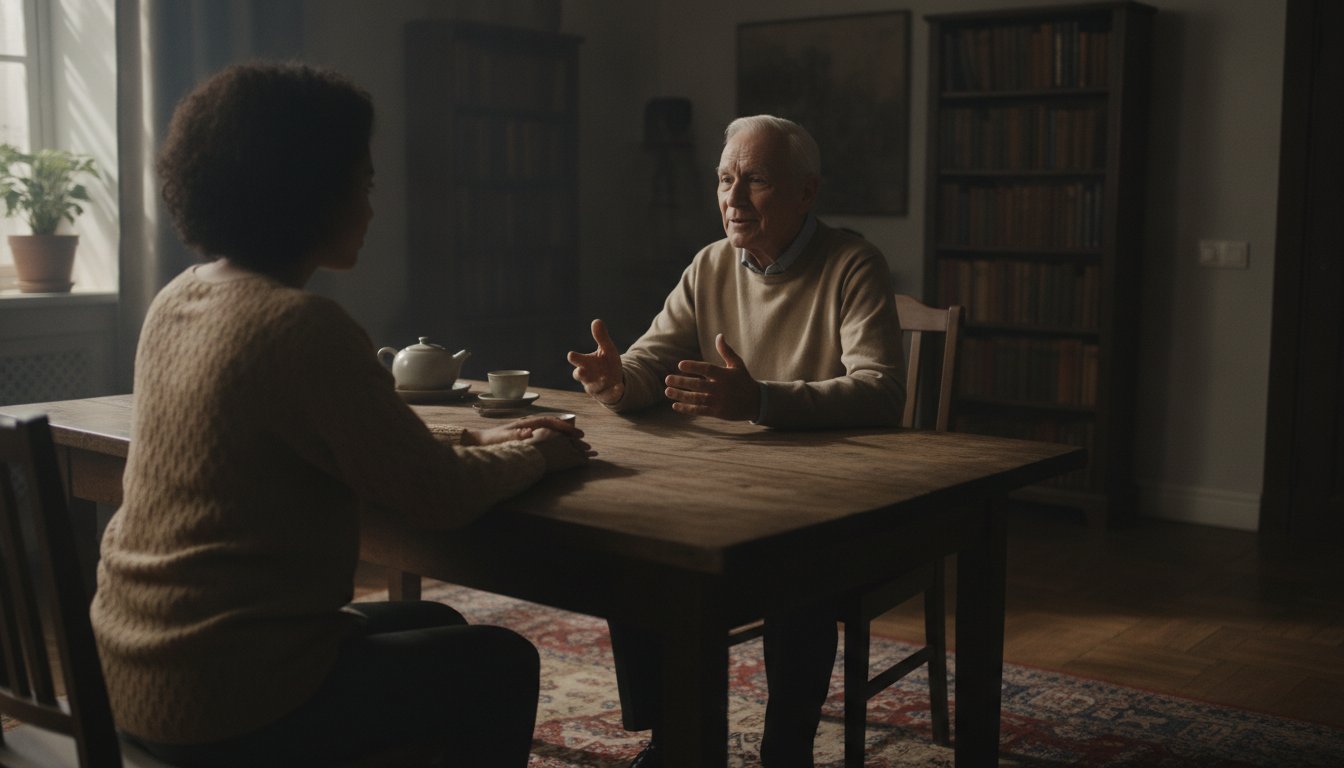
A sacred guide doesn't walk ahead of you to show you the way. They walk beside you to help you see where you already are. In certain seasons of life, the soul requires more than just rest; it requires attunement. This is the essence of Sacred Accompaniment. It is a professional relationship built on safety and deep listening. It's important to recognize that soul care is not clinical mental health counseling. Instead, it is a spiritual process of discernment. A trained director maintains professional boundaries that ensure the space remains sacred and focused on your autonomy. They help you navigate the internal noise without being consumed by it.
What is Sacred Accompaniment?
A spiritual director serves as a listener for the Spirit. They are trained to hear the undertones of your life. When you are too close to your own history to see the patterns, a director offers a holy perspective. They help you identify where God has been moving in the margins of your days. If you find yourself stuck in a repetitive cycle of spiritual exhaustion, seeking spiritual direction for women can be the catalyst for a deeper breakthrough. It turns a solitary walk into a shared journey of discovery.
The Communal Retreat Experience
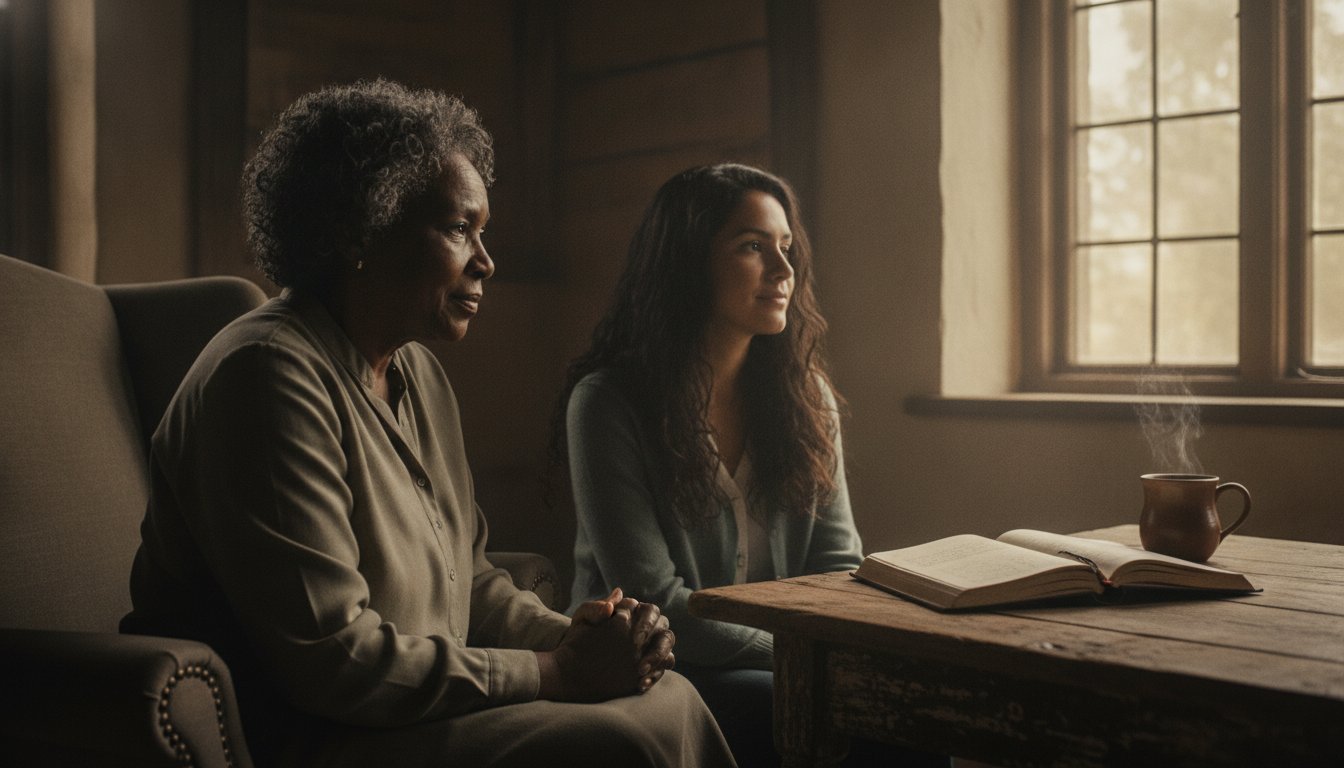
There is a unique power in the "silent together" model. You aren't required to perform or entertain. You simply exist in the presence of others who are also seeking the Divine. This communal support provides a quiet validation. When we hear the echoes of another's story, our own experiences of grace are often clarified. Participating in a christian storywork retreat allows you to witness the movement of God in a collective setting. It reminds us that while our stories are individual, the Author is the same. We find that our personal healing is often woven into the healing of the community.
Preparing for the Architecture of Silence
Silence is not a void. It is a structure. When you first step into the space of a women's soul care retreat, you may find the quiet surprisingly loud. This is the detox period. For years, your nervous system has been tuned to the frequency of high-output demands and digital pings. When that noise stops, anxiety often rises to the surface. It's a natural friction. Your soul is adjusting to a different atmosphere. Don't be startled by the internal restlessness; it's simply the sound of your spirit beginning to exhale. The entry into sacred space is rarely a leap. It's a slow, deliberate walk.
Preparation is the bridge that carries you from the frantic to the hallowed. To honor the architecture of silence, you must first secure the perimeter of your life. This involves practical boundaries that protect your peace. Consider this checklist for your external preparation:
Childcare and Family: Ensure your absence is fully supported so your mind doesn't wander back to the needs of the home.
Work Boundaries: Set your "out of office" notifications 24 hours early to allow your mental tab-switching to slow down.
Digital Fast: Power down your devices before you arrive. The soul cannot be heard through the static of a screen.
Once the external noise is hushed, turn toward internal preparation. Ask yourself one honest question: "What is the one thing I am bringing to God today?" You don't need a list of petitions. You only need a single point of focus. Remember that the soul is unhurried. It doesn't respond to deadlines or spiritual quotas. If you are seeking a structured environment to begin this process, exploring our Spiritual Formation Retreats can provide the intentional framework your spirit is craving.
The Practicalities of the Quiet Day
Beauty is a language God uses to speak to the weary. Choose a location that feels sacred, whether it's a sun-drenched corner of a garden or a quiet chapel. When packing, bring tools that invite reflection rather than productivity. A journal, a set of watercolor pens, or a few sacred texts are enough. Avoid the temptation to create a rigid spiritual to-do list. Instead, set gentle expectations. You are there to be with God, not to perform for Him. The goal is to create a hospitable space for your own presence.
Navigating Spiritual Dryness on Retreat
What happens if you arrive and feel nothing? Spiritual dryness is not a failure. It's often a sign of deep work happening beneath the surface. When the "nothingness" feels heavy, lean into holy curiosity instead of holy productivity. Ask the silence what it has to tell you. During these dry spells, using a contemplative prayer guide can offer a gentle handrail to hold. It provides a rhythm when your own internal melody feels faint. Trust that even in the dryness, the Author is still at work, preparing the soil for the next chapter of your story.
StoryLogian: Sacred Spaces for the Weary Soul
Dr. Shonda Carter views the human experience through a unique lens. It is a perspective that blends the deep roots of theology with the visual intentionality of filmmaking and the restorative power of storywork. In a women's soul care retreat hosted by StoryLogian, we don't simply offer a place to sleep. We offer a curated atmosphere. It is deeply reflective. It is rhythmic. Most importantly, it is safe. We believe that your life is a masterpiece in progress, a film that requires a careful, frame-by-frame review to see the beauty that has been there all along. This isn't a transactional interaction. It's a shared journey into the heart of the Divine.
Our approach is methodical and gentle. We move beyond the surface level of "feeling better" to reach the depth of "being whole." By integrating storywork sessions into the very fabric of the retreat, we provide the tools for an internal excavation. You are invited to look at the plot twists of your life with holy curiosity. We move from a state of quiet unrest toward a sense of integrated wisdom. You begin to see how the disparate pieces of your history fit into a larger, sacred narrative. This is the work of spiritual formation. It's the process of letting God’s light illuminate every chapter of your story.
A Compassionate Witness to Your Story
Healing often requires a witness. There is a profound mercy in being seen and heard without the pressure to perform. At StoryLogian, we provide that sacred accompaniment. We understand that for many women, especially those in high-output roles, the soul becomes brittle under the weight of expectations. This is why we offer specific soul care for ministry leaders. It's a sanctuary for those who spend their lives pouring out for others. We help you identify the early signals of burnout and provide a space where you can lay down the mantle of leadership to simply be a child of God. In being witnessed, the isolation of your struggle begins to dissolve.
Your Next Step Toward Stillness
The path to restoration is rarely a sprint. It's a series of small, intentional steps. If the idea of a full women's soul care retreat feels overwhelming, consider starting with a "Quiet Day." It is a gentle entry into the architecture of silence. It allows you to practice the art of being present to God’s presence without the commitment of a multi-day journey. When you feel the pull toward a deeper dive, you may choose to book a consultation for a storywork intensive or explore our Spiritual Formation Retreats. Your story is not just a record of the past. It is a sacred text that God is still writing. It deserves to be read with reverence. It deserves to be honored with your full attention.
Reclaiming the Peace of Your Sacred Narrative
Your story is not a finished book. It's a living text. You have explored how a women's soul care retreat moves beyond the surface of self-care to reach the depth of eternal restoration. We have seen that your history is the very ground where God meets you. True stillness requires a slow entry into the architecture of silence. It requires a heart willing to be witnessed. You are the beloved, and your journey deserves a sacred space to unfold.
It's time to step into that silence. Led by Dr. Shonda Carter, a Spiritual Director and Theologian, StoryLogian offers a specialized Narrative Storywork Framework designed for deep healing. With contemplative spaces available nationally, we invite you to move from the noise of the world into the sanctuary of your own soul. Explore Upcoming Retreats and Storywork Intensives at StoryLogian.
Your narrative is sacred. It deserves to be honored. Take the first step toward integrated wisdom and let the Author show you what comes next. You aren't alone in this story.
Frequently Asked Questions
What is the difference between a retreat and a vacation?
A retreat is a purposeful withdrawal for spiritual engagement, while a vacation is primarily for leisure or entertainment. In a vacation, we often seek to escape the pressures of our lives. In a retreat, we seek to encounter our lives more deeply. It is the vital difference between seeking a distraction and seeking a direction.
Do I need to be a "writer" to participate in a storywork retreat?
You don't need any literary background or professional writing skills to engage in storywork. This practice isn't about crafting a publishable manuscript; it's about witnessing the movement of God in your personal history. We use simple prompts and prayerful reflection to help you see the divine thread woven through your narrative.
How long should a soul care retreat be for a beginner?
A "Quiet Day" or a single overnight stay is an ideal starting point for someone new to a women's soul care retreat. This shorter duration allows you to experience the detox from digital noise without the overwhelming pressure of extended silence. As your soul becomes accustomed to this rhythm, you can transition to longer stays.
What if I am uncomfortable with long periods of silence?
It's natural to feel a sense of friction or anxiety when the external world first goes quiet. We provide gentle handrails, such as guided prompts or contemplative prayer techniques, to help you navigate the stillness. Silence isn't a test of your endurance; it's a hospitable space where you are invited to listen at your own pace.
Can I do a soul care retreat online or at home?
You can certainly create a sacred space at home for a "Quiet Day" or participate in virtual storywork sessions. While a physical change of scenery helps establish boundaries, the primary movement of a women's soul care retreat is internal. We offer digital resources to help you curate a rhythmic and reflective environment wherever you are.
How do I explain my need for a retreat to my family or church?
Frame your need as a vital practice of spiritual formation rather than a luxury or an escape. You might explain that you are seeking a "rhythm of return" to ensure you are pouring from a full cup. By prioritizing your connection to God, you are becoming a more present and integrated version of yourself for those you serve.
Is soul care the same as therapy?
Soul care is a spiritual process of discernment and accompaniment, whereas therapy is a clinical approach to mental health. While both involve deep listening and reflection, soul care focuses specifically on the sacred narrative God is writing. It is not a replacement for clinical intervention, but it is a beautiful companion to your spiritual growth.
What should I do if I feel "stuck" or bored during my retreat?
Lean into holy curiosity when you feel the urge to be productive or entertained. Being "stuck" is often a sign that you are standing at a threshold where the soul is waiting for the mind to slow down. Use these moments to observe your internal landscape without judgment, trusting that the stillness itself is doing a deep work.

Comments