Healing Your Personal Narrative: A Sacred Path to Reclaiming Your Story
- Dr. Shonda Carter
- May 21
- 12 min read

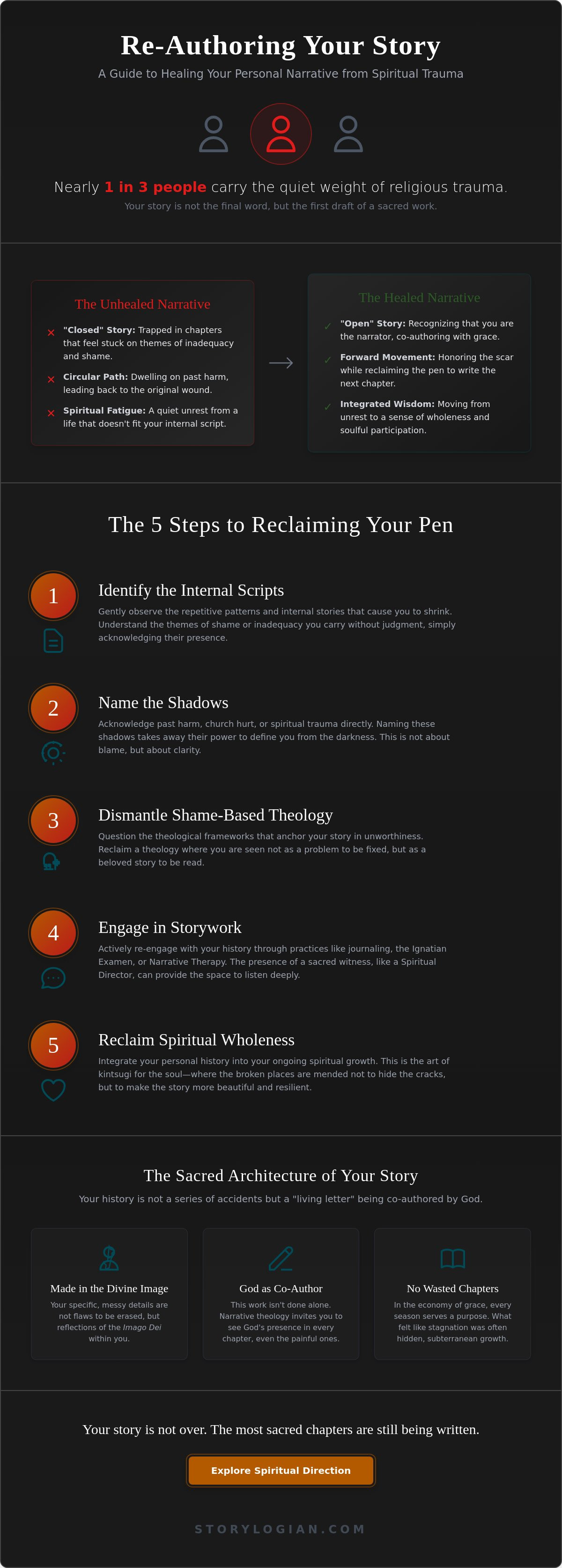
What if the stories you tell yourself about your past are not the final word, but merely the first draft of a much deeper, sacred work? Recent sociological research indicates that nearly one-third of the population carries the quiet weight of religious trauma. You aren't alone in feeling that your history is a collection of broken chapters or that you're defined by shadows of past harm. This sense of disconnect between your faith and your lived experience often creates an exhausting cycle of thought spiraling. Healing your personal narrative begins with the gentle realization that your story is still being written by a hand of grace.
You deserve to find a lasting peace with the pages already turned. We'll explore how to identify the specific threads of harm in your history and begin the sacred process of re-authoring your life through spiritual wholeness. This journey offers practical steps to integrate your personal history into your ongoing spiritual growth. We're moving away from a state of quiet unrest and toward a sense of integrated wisdom. Let's breathe. Let's begin.
Key Takeaways
Understand how the internal scripts you carry shape your identity and why these stories often become anchored in themes of shame or inadequacy.
Discover the sacred architecture of your history by exploring how your specific, messy details reflect the divine image within you.
Learn practical methods for healing your personal narrative by observing the repetitive patterns that cause you to shrink and naming the shadows of your past.
Gain tools to dismantle shame-based theologies and begin reclaiming your sense of spiritual wholeness from the wounds of church hurt.
Explore how narrative storywork and the presence of a sacred witness can help you transition from a story of unrest to one of integrated wisdom.
Table of Contents
What Does It Mean to Heal Your Personal Narrative?
Your life is more than a sequence of dates. It's a living, breathing story. At its core, your personal narrative is the internal script you've written to make sense of your existence. It's the "why" behind your choices and the "how" of your self-worth. In the academic study of Narrative Psychology, researchers explore how these stories aren't just reflections of reality; they actually construct our reality. Healing your personal narrative is the sacred process of revisiting these scripts to see where the ink has been smudged by harm or spilled by shame.
Many of us carry stories that feel stuck. We're trapped in chapters that should have ended years ago. These narratives often revolve around themes of inadequacy or being "not enough." We don't just remember the harm; we let it become the narrator. There is a vital difference between dwelling on the past and the sacred work of narrative healing. Dwelling is a circular path that leads back to the wound. Healing is a forward movement that honors the scar while reclaiming the pen. It's the difference between being haunted by a ghost and being guided by a memory.
This preservation of memory is a sacred task, particularly for those facing cognitive challenges. To support this journey, Providential Fijian Home Care invites you to explore Alzheimer’s and Dementia Care to find specialized resources that honor the individual's life story even in seasons of change.
The Internal Landscape of the Unhealed Story
Pay attention to the whispers. The echoes of past harm often manifest as a relentless, quiet self-talk that tells you to hide. These unexamined stories don't stay in the past. They shape how you show up in your marriage, how you lead in your work, and how you pray. When your narrative is rooted in "not enough," you experience a persistent, quiet unrest. It's a spiritual fatigue that comes from trying to live a life that doesn't fit the story you're telling yourself about who you are.
From Victim to Protagonist: A Shift in Perspective
You aren't just the subject of your life. You're the narrator. This shift is the beginning of true agency. To reclaim your story is to recognize that while you didn't choose the harm, you can choose how the story continues. It's a transition from a "closed" story, where the ending is already written in failure, to an "open" story. An open story is one that invites divine intervention into the messy details. By healing your personal narrative, you move from the sidelines of your own life into a role of soulful participation, ready to witness what grace can do with a reclaimed history.
The Sacred Architecture of Our Stories: A Narrative Theology
To look at your history is to gaze upon a sacred architecture. You are made in the Image of God, the Imago Dei, and that image isn't just a static quality of your spirit. It is etched into the very timeline of your life. God isn't looking for a polished summary or a highlight reel. He is deeply interested in the specific, messy details of your days. This theological lens is a transformative step toward healing your personal narrative. It suggests that your life is not a series of accidents, but a "living letter" written by the Spirit, as described in 2 Corinthians 3:3. You are a story being told to the world.
We often feel pressured to turn our lives into a "testimony," which usually requires a neat resolution and a tidy bow. But soul care goes deeper. While clinical Narrative Therapy provides tools to externalize our problems and rewrite our roles, narrative theology invites us to see God as the co-author who remains present in the tension. The work of healing your personal narrative is an act of worship. It is the process of recognizing that your identity is anchored in something much larger than your own mistakes or the harm done to you.
Finding God in the Ordinary and the Obscure
God's voice is rarely a shout. It is a whisper found in the ordinary. Through spiritual listening, we begin to hear the divine cadence in our past. The Ignatian practice of the Examen offers a gentle framework for this, helping us find sacred threads in a quiet afternoon or a difficult conversation. We must learn to honor the "middle" of our stories. Life is not lived only on the mountain peaks; it is lived in the long, dusty stretches where the ending isn't yet clear. If you find yourself needing a companion for this discovery, Spiritual Direction can provide the sacred space to listen deeply to what your life is saying.
The Sacredness of Every Chapter
There are no wasted years in the economy of grace. What felt like a season of stagnation was often a time of hidden, subterranean growth. Your body remembers where you've been; it is a faithful, quiet witness to your personal history. Honoring that history means refusing to tear out the pages that hurt. Instead, we re-read them through a lens of mercy. Try this practice. Write a one-sentence summary of your current chapter, but look specifically for the grace. When we name the grace, we begin to reclaim the story.
How to Begin Healing Your Personal Narrative: A Practical Guide
The movement from a stuck story to a liberated one is not a leap. It's a series of quiet, intentional steps. Having established the sacred architecture of your history, you must now engage in the active work of healing your personal narrative. This isn't about rewriting history to erase the hard parts. Instead, it's about shifting the perspective through which you view those parts. The American Psychological Association has extensively studied the power of personal narratives, noting how the stories we construct about our lives directly influence our mental health and sense of identity. When we bring this psychological reality into a spiritual context, it becomes a path to wholeness.
The journey begins with observation. You must become a witness to your own internal monologue. Notice the repetitive stories that cause you to shrink or hide. Once you see them, you name them. Naming is followed by contemplation, where you bring these stories into a space of prayerful reflection. From there, you begin re-authoring by asking what else is true about your history. Finally, you integrate these new, grace-filled insights into your present identity, allowing them to inform your daily choices. It's a slow, rhythmic process of reclamation.
Creating a Contemplative Space for Your Story
Healing requires a container of safety. Silence and solitude aren't just absences of noise; they're the presence of a deeper listening. As you sit in the quiet, use breath prayer to stay grounded. Inhale the truth of your belovedness. Exhale the need to perform. You might use journaling prompts to look for "sacredness in the shadows." Ask yourself: where did I feel a sense of protection even in the midst of the storm? These moments are the ink of grace that helps in healing your personal narrative.
The Power of Naming the Harm
In the biblical tradition, naming is an act of authority. When you name a harm, you stop it from being a nameless ghost that haunts you. It's vital to differentiate between what happened and the story you told yourself about what happened. For example, the event may have been a rejection. The story you told yourself might have been "I am unlovable." Try this exercise. Write a short paragraph describing a difficult memory with raw honesty. Then, rewrite it focusing only on where you saw your own strength or the support of others. You aren't changing the facts. You're changing the focus. You're reclaiming the pen.
Navigating the Shadows: Healing from Church Hurt and Spiritual Trauma
Church hurt is a unique kind of silence. It is the betrayal of the sanctuary. When the place that promised safety becomes the source of harm, the internal script fractures in a way that feels final. This isn't just a bad experience. It is a wound to the very place where you seek healing. Healing your personal narrative in this context requires a delicate, intentional dismantling of shame-based theology. This theology often teaches that you are a problem to be solved rather than a mystery to be honored. It colors your self-perception with the dark hues of inadequacy, making you believe that your worth is tied to your performance or your compliance.
To find the sacredness in these shadows, we must ask the hardest question: where was God when the story felt dark? Perhaps He wasn't in the shouting of the system. Perhaps He was the one weeping in the quiet corner of the room with you. Reclaiming your story means recognizing that God's presence is not always synonymous with the institutions that claim His name. It is a slow, methodical process of rebuilding trust in your own spiritual intuition. You are learning to hear the "still, small voice" again, beneath the noise of religious expectation.
Reclaiming the Sacred from the Religious
You must learn to distinguish between toxic systems and your own inherent worth. Systems fail. Structures crumble. But the light of the Imago Dei within you remains untouched by the failures of men. Deconstructing a harmful narrative doesn't mean you have to lose your faith. It means you're losing the parts of your faith that were never true to begin with. This process is rarely done well in isolation. It requires a witness who can hold the weight of your questions without rushing to provide easy answers. If you're navigating these heavy waters, Sacred Accompaniment offers a gentle partnership as you sift through the rubble to find what is truly holy.
Moving Beyond the 'Good Christian' Narrative
The pressure to have a "perfect" testimony is a heavy yoke. It demands a resolution that may not exist yet. It asks for a tidy bow on a story that is still bleeding. You don't need a polished ending to be whole. Embrace the "holy mess" of your life in transition. Your current chapter is not a sign of failure; it's a sign of life. There is profound freedom in the "not yet" of your spiritual journey. Healing your personal narrative means giving yourself permission to be a work in progress. You are allowed to be unfinished. You are allowed to be seen.
The Role of Storywork: Reclaiming Your Narrative of Hope
We've explored the internal landscape and the naming of shadows. Now, we consider the vessel that holds this transformation. Narrative storywork is not a solitary endeavor. It is a collaborative exploration of your life's deepest themes. You are the protagonist, yes, but you don't have to be the only one looking at the page. In the work of healing your personal narrative, the presence of a sacred witness changes the very nature of the story. It moves the experience from a private burden to a shared, sanctified discovery. You're invited to step out of the isolation of your past and into a light that is held by another.
It's helpful to understand how storywork sessions differ from clinical counseling. While counseling often seeks to resolve symptoms or navigate behavioral change, storywork is an act of spiritual discernment. We aren't looking for what is "wrong" with you. We're looking for what is true about you. We're seeking the sacred thread that has survived every season of harm. This process focuses on the soul's movement toward wholeness, allowing you to move toward a narrative of hope that fuels your future purpose. You aren't just recovering; you're becoming.
Why We Need a Witness to Our Stories
There is a unique healing power in being deeply heard. A guide provides more than just an ear; they offer a mirror that reflects the grace you may have missed. We all have blind spots in our own histories. We tend to over-index on our failures and under-read the moments where we were sustained by a strength not our own. A sacred witness helps you identify these hidden mercies. By transitioning from a solitary struggle to a shared journey, the story begins to breathe. The weight is distributed. The meaning is clarified.
Steps Toward a Narrative of Hope
A healed story demands a new way of living. You might find yourself developing a "rule of life" that honors your reclaimed identity. This is a rhythmic commitment to practices that keep you grounded in grace rather than shame. Eventually, your history ceases to be a source of secrets and becomes a source of comfort for others. Your journey becomes a testament to the possibility of restoration. If you feel ready to move beyond the quiet unrest of your current chapter, consider inviting Dr. Carter to walk with you through a storywork intensive or a season of Sacred Accompaniment. Your story is sacred. It deserves to be told in the light.
Reclaiming the Pen of Your Soul
Your story is not a closed book. It's a living, breathing testament to the resilience of the human spirit under the gaze of grace. We've walked through the internal landscapes of the unhealed story and explored the sacred architecture that underpins every chapter of your life. You've seen that naming the harm and dismantling shame-based theologies are not just psychological tasks. They're holy movements toward wholeness. Healing your personal narrative is an act of profound spiritual courage, a choice to believe that your future is not held captive by your past.
You don't have to carry the weight of interpretation alone. Dr. Shonda Carter, a seasoned theologian and spiritual director, provides safe, contemplative spaces for deep narrative exploration through a faith-integrated approach to soul care. This is an invitation to move from quiet unrest into a shared journey of discovery. It's time to witness what grace can do with the pages you once thought were lost. Begin your journey of re-authoring with a Storywork Session and see how the threads of your history can be woven into a new garment of hope. Your history is honored here. Your future is open.
Frequently Asked Questions
What is the difference between narrative healing and traditional talk therapy?
Narrative healing focuses on spiritual discernment and the soul's movement toward wholeness rather than clinical symptom management. While traditional therapy often addresses behavioral patterns or mental health diagnoses, storywork is a sacred inquiry into the themes of your life. It is a collaborative journey where we look for the thread of grace that survives every season of unrest.
Can I heal my personal narrative if I don't consider myself 'religious'?
Yes, this path is open to anyone seeking deeper meaning, regardless of their affiliation with a specific church. While organized religion is seeing a decline in the U.S., a 2025 report notes that 83% of Americans still believe in a Universal Spirit or God. Healing your personal narrative is about your internal landscape and the sacredness of your unique existence, which transcends dogmatic boundaries.
How long does the process of narrative storywork typically take?
The pace of this work is organic and varies for every individual. It is not a transactional service with a hard deadline. Instead, it's a methodical process that allows ideas to settle before moving forward. Some find clarity in a few sessions; others choose ongoing Sacred Accompaniment to allow their new narrative to fully integrate into their daily life.
Is it possible to re-author a story that involves significant trauma or abuse?
It is possible to re-author a story of trauma by shifting the focus from the harm to the presence of grace and strength. You aren't changing the facts of what happened. You're reclaiming the pen from the shame that seeks to define you. This is a delicate process that requires a safe, witness-led environment to ensure your autonomy and pace are honored.
What if I feel like my story doesn't have any 'sacred' elements in it?
Sacredness is often found in the most obscure and ordinary corners of our history. If you feel your story lacks divine elements, it may be that you're looking for a shout when God is whispering. We use practices like spiritual listening to uncover the hidden threads of protection and endurance that have been present even in your darkest chapters.
How do I know if I need spiritual direction or a storywork session?
Spiritual direction offers ongoing, long-term companionship for your general spiritual growth. Storywork sessions are more focused; they are specifically designed for deep exploration of your life's narrative themes and the healing of specific "stuck" chapters. Both serve to create a sacred space, but storywork is a more targeted dive into the architecture of your personal history.
Can healing my narrative actually change how I feel physically?
Healing your personal narrative can lead to a profound sense of physical relief as you release the tension of unexamined shame. The body is a faithful witness to your history. When you stop the cycle of thought spiraling and find peace with your history, the chronic exhaustion of emotional unrest often begins to lift. You're learning to breathe again.
Is narrative healing a one-time event or a lifelong practice?
Reclaiming your story is a lifelong practice rather than a single event. While a specific session can provide a breakthrough, the integration of a new narrative requires a daily "rule of life." It is a rhythmic commitment to honoring your worth and listening for the sacred in each new day. You're always becoming.


Comments