Narrative Healing from Spiritual Abuse: Reclaiming Your Sacred Story
- Dr. Shonda Carter
- May 23
- 13 min read

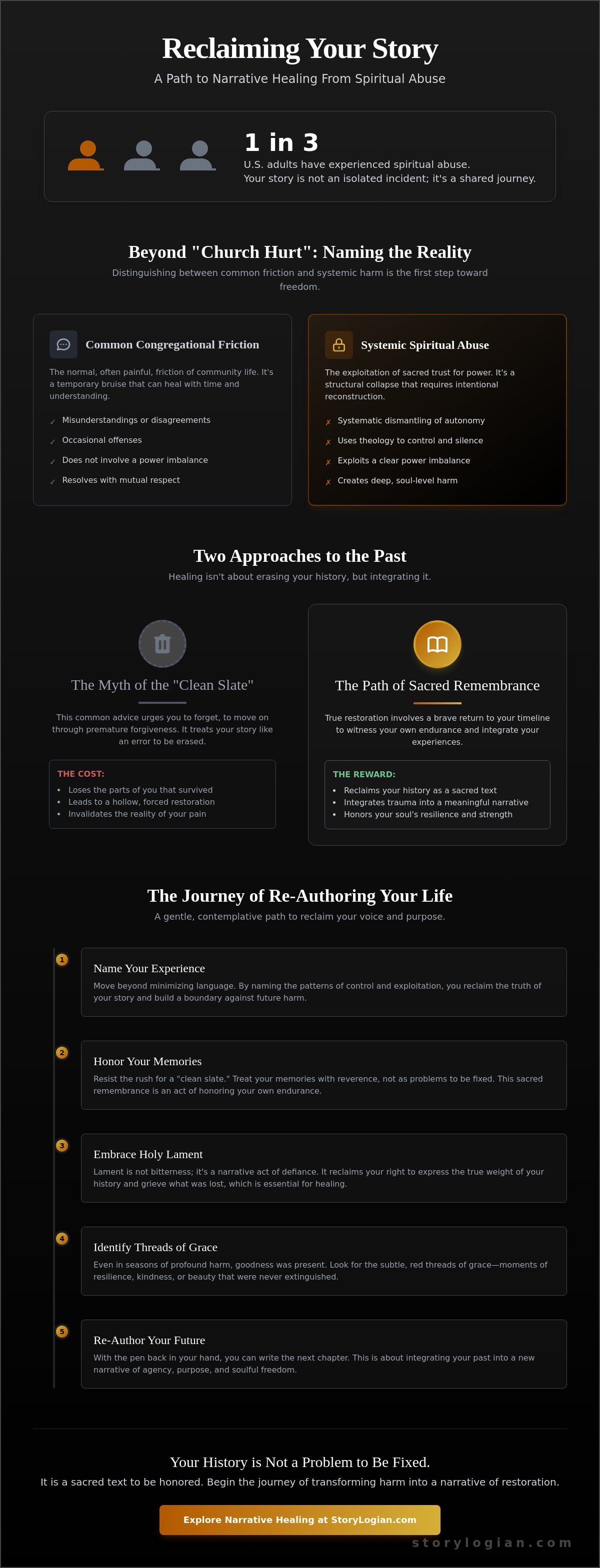
What if the fragments of your story aren't evidence of your failure, but the raw material for a new kind of holiness? For too long, you've lived in the quiet unrest of a voice suppressed by those who claimed to speak for God. You've struggled to distinguish between the heart of God and the shadow of toxic leadership. It's exhausting to carry a history that feels like a source of shame, yet narrative healing from spiritual abuse begins with the simple, brave act of telling the truth. You aren't alone in this silence; research indicates that approximately 33% of U.S. adults have walked this difficult path.
While I am heartbroken when confronted with statistics, what got me involved with the A21 Walk For Freedom was an opportunity to be a voice for the voiceless. On the day of the walk, we walked hearing the story of survivors of human trafficking and at that moment we went from being "volunteers" to faith in motion. We did not feel sorry for those survivors, we felt reverence.
I believe your history is not a problem to be fixed, but a sacred text to be honored. This article explores how the gentle art of storywork can transform the fragments of spiritual harm into a narrative of sacred restoration. You'll learn how to reclaim agency over your personal history and integrate your trauma into a meaningful spiritual narrative. We'll walk through the path of re-authoring your life within a safe, contemplative space that hears you fully.
Key Takeaways
Learn to name your experience by distinguishing between common congregational friction and the systemic exploitation of sacred trust.
Discover why deep restoration requires honoring your memories rather than rushing toward a forced or hollow "clean slate."
Embrace holy lament as a narrative act of defiance, reclaiming your right to express the true weight of your history.
Identify the subtle, red threads of grace that remained present in your life, even during your seasons of profound harm.
Explore how narrative healing from spiritual abuse offers a soulful path to re-authoring your future with agency and sacred purpose.
Table of Contents
Beyond "Church Hurt": Naming the Reality of Spiritual Abuse
Words carry weight. Often, we use the term "church hurt" to describe the friction of community life. It sounds like a bruise that will fade with a little time. But for many, the wound is not a surface scrape; it's a structural collapse. True spiritual abuse is the exploitation of sacred trust for the sake of power. It's not a simple misunderstanding between pews. It's the systematic dismantling of a person's autonomy using the very language of the Divine. When the person who represents God to you becomes the source of your pain, the trauma reaches into the deepest parts of your soul. This is why narrative healing from spiritual abuse is so vital. It addresses the way your internal map has been redrawn by someone else's hand. Defining Spiritual Abuse requires us to look past the occasional offense and see the patterns of control. Naming this reality is the threshold of freedom. It's the moment you stop blaming yourself for the wreckage and start seeing the truth.
The Anatomy of a Silenced Story
Abusive systems thrive in the dark. They use theology like a gag, twisting scriptures about submission to ensure your story never leaves your lips. Shame becomes the architect of your silence. You begin to believe that your pain is a sin. Eventually, the voice of the leader becomes an internalized critic. It's a hollow echo that follows you home, whispering that your doubt is a betrayal of faith. Breaking this cycle requires more than just leaving a building. It requires unmasking the lies that have settled in your bones.
Why Traditional Recovery Often Falls Short
Healing isn't a straight line. In many religious circles, you're met with a mandate for "premature forgiveness." You're told to let go before you've even had the chance to hold the truth. While clinical therapy provides vital tools, it can sometimes miss the distinct ache of a wounded spirit. Your story isn't just a set of symptoms; it's a sacred narrative that has been vandalized. This soul-harm requires a contemplative, story-focused approach. It's about finding a space where the fragments of your experience are treated with reverence rather than haste.
When we name the harm, we begin to take back the pen. The confusion about what is "God" versus what was "toxic leadership" starts to dissipate as we look at the evidence of our own lives. You don't have to carry the weight of their systems any longer. By identifying these patterns, you create a boundary. You decide that your story is no longer a tool for their control, but a landscape for your own restoration. This is the first step of a long, beautiful journey toward reclaiming your voice.
The Myth of the "Clean Slate": Why Narrative Healing Requires Looking Back
We are often told that healing is found in forgetting. We are urged to wipe the slate clean, as if our history were a chalkboard error to be erased. Yet, for those seeking narrative healing from spiritual abuse, the path forward leads through the past. To forget is to lose the parts of yourself that survived. True restoration isn't found in a "clean slate," but in a reclaimed one. It involves a brave return to your own timeline, not to dwell in the pain, but to witness your own endurance. This process of healing your personal narrative requires a courageous backward glance to see where the light was never truly extinguished. You are the author of what happens next, but you cannot write the second act if you have torn out the pages of the first.
Narrative Theology and the Sacredness of History
Narrative theology suggests that God doesn't stand apart from our stories. Instead, the Divine meets us within the specific, often messy chronologies of our lives. Your history is a site of revelation. It is the soil where your soul has grown, even in seasons of drought. There is a vital difference between rumination and sacred remembrance. Rumination is a circular trap of despair; sacred remembrance is a linear journey of integration. It is the act of looking back to find the "sacred thread" of your own being that remained unbroken, even when spiritual authorities tried to snap it. Your life is not a series of random accidents, but a story that carries weight and meaning.
Storywork for Trauma: A Gentle Approach
Engaging with trauma requires a pace that honors your nervous system. Clinical practices like Narrative Exposure Therapy demonstrate how structured storytelling can help the brain process traumatic events. In a spiritual context, we call this storywork. It is a tool for recovery that prioritizes your autonomy and safety. We move slowly. We pause often. By pacing the narrative journey, you can look at difficult memories without becoming overwhelmed by them. This methodical grace allows you to untangle the knots of shame at your own speed. This is not about reliving the harm, but about retrieving the parts of your spirit that were left behind in the wreckage. If you find yourself ready to begin this unhurried exploration, our Storywork Sessions offer a safe container for your history to be heard and held with reverence.
Busting the Myth of Bitterness: Finding Holy Lament in Your Story
Bitterness is a label often weaponized to silence the wounded. It's a convenient way for systems to dismiss the heavy weight of truth by framing it as a character flaw. But what if your anger isn't a sign of lost faith? What if it's the very beginning of narrative healing from spiritual abuse? We must distinguish between the stagnant pool of bitterness and the holy weight of truth. Anger is often the soul’s way of declaring that something sacred was violated. It's not a lack of grace; it's the presence of dignity. When we explore the role of story in faith, we find that the most resilient narratives are those that honor the dark chapters with as much reverence as the light.
Reclaiming the Language of Lament
Lament is a lost art in many modern religious spaces. We're frequently taught to be "fine" before we've even begun to process the harm. Yet, the history of faith is filled with voices crying out in protest. These aren't just complaints. They're narrative acts of defiance against spiritual silencing. Writing your own psalm of lament allows you to be "un-fine" in the presence of the Divine. It's a healing exercise that creates a bridge between your pain and your presence. You don't have to perform a version of yourself that doesn't exist. You are allowed to question, to cry out, and to sit in the silence of the unanswered.
The Narrative Power of Truth-Telling
Telling the truth is a spiritual discipline. It acts as an externalization of the internal rot that abuse leaves behind. Current research on spiritual abuse and narrative healing emphasizes that relaying one's story is a central component of reclaiming agency. When you name the facts of what occurred, you move from being a character in someone else's script to being the author of your own. There is significant psychological relief in externalizing a previously hidden story. You move from the position of a victim to the role of a witness. This naming of facts is not about revenge; it's about restoration. It's about ensuring that the truth of your life is no longer held hostage by those who sought to control it.
By shifting from a narrative of shame to one of lament, you change the atmosphere of your internal landscape. You realize that your story is not a source of embarrassment, but a testament to your survival. This transition is not fast. It's a slow, deliberate movement toward integrated wisdom. You begin to see that your voice matters, not because it's perfect, but because it's yours. This is where the fragments of spiritual harm begin to take on the shape of a sacred restoration.
Re-Authoring Your Faith: Practical Steps to Reclaim Your Voice
The pen is back in your hand. After years of living within a script written by others, the work of narrative healing from spiritual abuse allows you to reclaim the authority over your own life. This isn't a linear march toward a finish line. It's more like a spiral, where we return to the same themes with deeper wisdom each time. Re-authoring is the process of looking at the chapters of your life and deciding that the abuse is a part of your history, but it's not the point of your story. You are integrating the "wounded self" into a new, resilient spiritual identity that no longer bows to the demands of toxic systems.
Step 1: Creating a Sanctuary for Your Story
Before you can tell the truth, you need a place where the truth is safe. Establish a contemplative space for your reflection. This might involve the ritual of lighting a candle, the comfort of silence, or the tactile feel of a physical journal. Within this sanctuary, you might seek Sacred Accompaniment to provide a safe container for your experiences. To begin, write a single, honest sentence identifying one specific moment where you felt your voice was taken. Perhaps it was a meeting behind closed doors or a sermon that felt like a personal indictment. Naming that moment is the first act of reclamation.
Step 2: Identifying Themes of Harm and Hope
Once the space is set, begin mapping the plot points of your spiritual journey. Look for the recurring themes of control or manipulation that characterized the abusive system. However, don't stop at the harm. Look closer for the "red threads" of grace that were present even in the pain. These are the moments where you survived, where you resisted, or where you kept your heart secret and safe. These counter-narratives are the evidence of your enduring spirit. They prove that while the system was powerful, it was never absolute.
Step 3: Re-Authoring the Conclusion
Finally, you move into the work of narrative agency. You get to decide how your story continues beyond the reach of the abusive environment. This involves choosing your future faith practices with intention rather than obligation. You might craft a "statement of sacred intent" for your ongoing recovery, a short declaration of what you will protect and what you will pursue. You are no longer a character waiting for a leader's permission. You are the author, choosing a path of integrated wisdom and quiet peace.
If you feel the weight of these steps is too much to carry alone, our Storywork Sessions offer a gentle, guided way to begin this sacred re-authoring of your life.
Finding Sacred Accompaniment: The StoryLogian Approach to Restoration
The path toward restoration doesn't have to be solitary. While the work of reclamation happens within the quiet of your own heart, there's a profound power in being seen by a sacred witness. Dr. Shonda Carter brings a unique perspective to this process, blending the deep roots of theology with the narrative precision of filmmaking. This approach recognizes that your life isn't just a series of events; it's a masterpiece that has been obscured by the shadows of others' control. Just as a filmmaker searches for the light in a frame, we look for the presence of the Divine in the scenes of your life that felt most abandoned. In our storywork sessions, we move beyond the clinical or the transactional. We aren't here to fix a problem or manage a set of symptoms. Instead, we offer narrative healing from spiritual abuse by honoring the internal landscape of your story with the dignity it's always deserved.
One-on-One Storywork Intensives
Entering a session feels different than a typical professional consultation. It's an unhurried, reverent space. We prioritize your autonomy above all else. You won't find a push toward a pre-packaged resolution or a clinical diagnosis here. Instead, you'll find Sacred Accompaniment. This means we walk alongside you at your own sacred pace, holding a lamp as you navigate the quiet, often unspoken elements of your history. We believe that you are the primary expert on your own life. Our role is to hold the space, to listen for the themes of your soul, and to interpret the process as you begin to see the beauty that survived the fire. This is a methodical, gentle way to retrieve the fragments of yourself that were lost in the wreckage of toxic systems.
A Path Toward Integrated Wisdom
Healing is the movement from fragmented trauma toward a coherent story of hope. It's the slow, organic process of gathering the scattered pieces of your history and seeing how they fit into a larger, more resilient arc of wisdom. You've spent long enough feeling silenced by authority figures who claimed to know your heart better than you did. Now is the time to breathe. Whether through our one-on-one intensives or the immersive experience of our Spiritual Formation Retreats, the goal is always the same: to help you find a steady, guided movement toward wholeness. You don't have to rush. The truth of your sacred story will wait for you to find the words. This journey is about moving from a state of quiet unrest toward a sense of integrated wisdom, where your past no longer defines your future.
The Dawn of Your Reclaimed Narrative
Your history is no longer a source of shame. It's the ground where integrated wisdom begins to grow. We've walked through the necessity of naming the harm, the power of holy lament, and the practical steps of re-authoring a faith that is truly your own. The work of narrative healing from spiritual abuse is not a quick fix or a clinical exercise. It's a slow, deliberate homecoming to the person you were always meant to be, a process that honors every fragment of your experience.
Founded by Dr. Shonda Carter, a theologian and filmmaker, StoryLogian offers a specialized focus on Christian storywork for women. This contemplative, trauma-informed approach to soul care provides a safe container for your truth to be held with reverence. You don't have to carry the weight of a silenced history alone. There is a space waiting for you where your autonomy is respected and your story is treated as sacred text.
Begin your journey of narrative restoration with a Storywork Session. Your story is waiting to be reclaimed, and the next chapter belongs to you.
Frequently Asked Questions
What is the difference between spiritual abuse and church hurt?
Spiritual abuse is the systematic exploitation of sacred trust for power, whereas "church hurt" typically refers to the unintentional friction found in any community. Abuse involves a deliberate pattern of control that dismantles your autonomy using the language of the Divine. It's a structural collapse rather than a temporary bruise. Recognizing this distinction is the essential first step toward reclaiming your voice and understanding that the wreckage was never your fault.
Can I heal from spiritual trauma without leaving my faith entirely?
You can absolutely find restoration without abandoning your faith. Many find that narrative healing from spiritual abuse actually allows them to distinguish the heart of the Divine from the shadow of toxic leadership. It's a process of untangling the knots. You're stripping away the distortions imposed by others to rediscover a sacred connection that's authentic, safe, and entirely yours. It's a homecoming to a faith that breathes.
How do I know if I need storywork or traditional therapy?
Storywork focuses on the sacredness of your history and spiritual integration, whereas traditional therapy often addresses clinical symptoms or behavioral patterns. If you feel a deep need to witness your life as a meaningful narrative and find the "red threads" of grace, storywork provides that contemplative space. It's about honoring the soul's journey rather than just fixing a problem or managing a set of symptoms.
Is storywork for trauma safe for someone with a history of deep religious harm?
Storywork is designed to be a safe, unhurried container that prioritizes your autonomy and nervous system. We move at a pace that honors your internal landscape. Unlike environments that demand a "clean slate" or quick resolution, this approach allows you to look at difficult memories without becoming overwhelmed. It's a gentle retrieval of the spirit. We hold the space for your story to be heard with reverence.
How long does the narrative healing process typically take?
The process of narrative healing from spiritual abuse is organic and circular, meaning it doesn't follow a linear timeline. For some, a single season of Storywork Sessions provides the necessary clarity to move forward. For others, it's a longer, rhythmic journey of discovery. Your soul knows the pace it needs. We treat this movement with significant weight and respect, allowing ideas to settle. It's a steady, guided movement that feels intentional.
What if I am not ready to forgive those who abused their spiritual authority?
Forgiveness isn't a prerequisite for beginning your recovery. In fact, rushing toward it can often be a form of "premature forgiveness" that silences your true experience. We prioritize holy lament and truth-telling first. You're allowed to sit in the "holy weight of truth" and express anger or grief before even considering the concept of forgiveness. Your agency comes first. We believe your story deserves to be told before it's resolved.
How can a spiritual director help me with spiritual abuse recovery?
A spiritual director provides "sacred accompaniment" by acting as a wise, patient guide who witnesses your process without judgment. They don't look to fix you; they look to listen to the Divine movement within your life. This relationship creates an atmosphere of safety where you can explore the unspoken elements of your experience. It's a shared journey toward integrated wisdom. They hold the space for silence, complexity, and the quietest whispers of your soul.
What does it mean to "re-author" my story in a faith-based context?
Re-authoring your story means reclaiming the pen from those who sought to write your life for you. In a faith-based context, it involves identifying where you resisted or survived and choosing how your narrative continues. You decide which spiritual practices to keep and which to release. It's the act of turning the fragments of your history into a coherent story of hope. You're no longer a character, you're the author.


Comments