The Sacred Thread: Exploring the Role of Story in Faith and Healing
- Dr. Shonda Carter
- May 22
- 14 min read

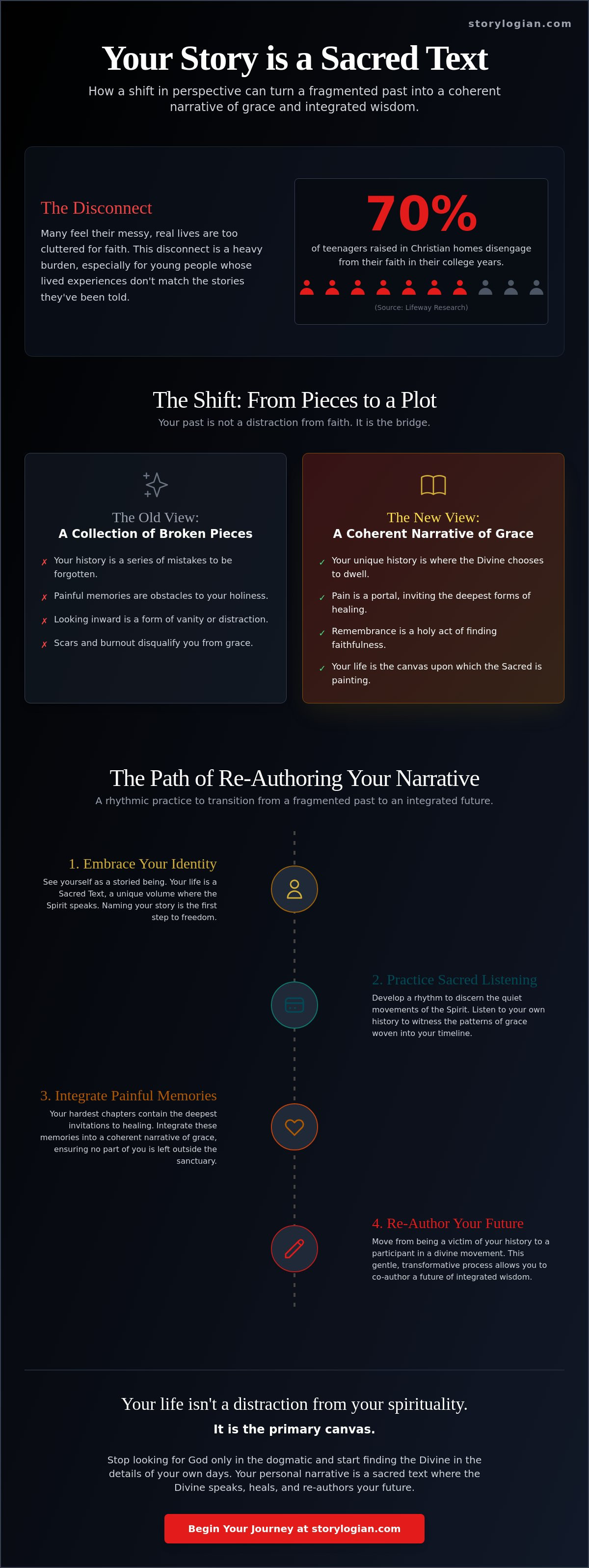
What if the messy, fragmented parts of your past aren't obstacles to your holiness? We often feel that our real life is too cluttered for the sanctuary. We hide the scars and the silence of burnout; we fear they disqualify us from grace. This disconnect is a heavy burden. Research from Lifeway indicates that 70% of teenagers raised in Christian homes disengage from their faith in their college years. Often, this happens because the stories they were told don't match the lives they are actually living. Yet, understanding the role of story in faith reveals something far more profound. You might believe your history is a series of mistakes to be forgotten. Your life isn't a distraction from your spirituality. It is the primary canvas upon which the Sacred is painting.
When I first heard of the term "deconstruction, " I immediately thought of Lauryn Hill. The Miseducation of Lauryn Hill is Lauryn Hill asking:
“What happens when a Black woman stops performing survival and starts telling the truth?”
The album is about being “educated” by heartbreak, motherhood, faith, racism, fame, desire, and disillusionment instead of by institutions. Even the title is a critique. She’s saying the world teaches you how to achieve, perform, seduce, hustle, and survive… but not necessarily how to love, heal, or remain whole.
It's time to stop looking for God only in the dogmatic and start finding the Divine in the details of your own days. Your personal narrative is a sacred text where the Divine speaks, heals, and re-authors your future. This article explores how to see your life as a coherent narrative of grace rather than a collection of broken pieces. You'll find ways to integrate painful memories into your journey and learn to feel truly seen and heard by God. We will examine the power of narrative as a spiritual discipline and how a shift in perspective can turn a life of quiet unrest into one of integrated wisdom.
Key Takeaways
Embrace your identity as a storied being, understanding that your unique history is the primary landscape where the Divine chooses to dwell.
Discover how the role of story in faith allows you to bypass rigid dogma and connect with God through the same narrative intimacy modeled by the parables.
Find a path to integrate painful memories and spiritual harm into a coherent narrative of grace, ensuring no chapter of your life is left outside the sanctuary.
Develop a rhythmic practice of Sacred Listening to discern the quiet movements of the Spirit within the silence and stillness of your own heart.
Begin the transition from a fragmented past toward an integrated future through the gentle, transformative process of re-authoring your narrative.
Table of Contents
The Storied Soul: Understanding the Role of Story in Faith
We are not merely biological machines or collections of data points. We are narrative beings. From our first breath to our final sigh, we exist within a sequence of events that carry meaning, weight, and direction. This is the essence of the storied soul. It is the sacred intersection where your raw human experience meets the quiet, persistent presence of the Divine. When we explore the role of story in faith, we begin to see that our lives are not random. They are intentional. They are a form of narrative theology, a way of understanding God not through dry abstractions, but through the living, breathing reality of our personal histories.
Naming your story is the first movement toward spiritual freedom. Silence often keeps us captive to the past. By bringing our narratives into the light, we allow the Divine to speak into the gaps and the shadows. It is an act of courage to look at the plot of your life and ask where the Author has been hiding. This process requires a slow, deliberate pace. It asks us to breathe and to witness the patterns of grace that have been woven into our timeline, even when we weren't looking.
The Imago Dei as a Narrative Blueprint
To be made in the image of God is to be made in the image of a Creator. God did not just provide a list of rules; He spoke a world into existence through a grand, unfolding drama. We carry this narrative blueprint in our very DNA. Our lives function as a Sacred Text, a unique volume where the Spirit continues to whisper and work. This tradition of Biblical storytelling reminds us that faith has always been passed down through the sharing of lived experience and the honoring of shared history. The storied soul is a living testament of grace, a vessel designed to hold and reflect the light of the Infinite.
Why Your History is Not a Distraction from Faith
You might have been told that looking inward is a form of vanity. You might fear that dwelling on your past is a distraction from "real" spiritual growth. This is a misunderstanding of the heart. In the biblical tradition, remembrance is a holy command. It is not about being stuck; it is about finding the thread of faithfulness that has held you together even when you felt most alone. Your memories are not weights to be discarded. They are sacred artifacts waiting to be explored with reverence. Consider these truths about your history:
Memories are teachers. They reveal patterns of how you love and how you hide.
Pain is a portal. Your hardest chapters often contain the deepest invitations to healing.
Grace is retrospective. We often see the Divine most clearly when we look back at where we've been.
Your history is the very ground where faith takes root. Understanding the role of story in faith transforms your past from a graveyard of regrets into a garden of revelation. It is not an obstacle to your relationship with God. It is the bridge.
The Master Storyteller: How Jesus Revealed the Divine Through Narrative
Jesus rarely answered a direct question with a direct answer. He preferred the curvature of a parable. Dogma can be cold; it sits on the shelf of the intellect. Stories, however, are warm. They slip past our defenses and take up residence in the heart. By choosing narrative over dry propositions, Jesus honored the way we actually process reality. He recognized that the power of story in faith is found in its ability to make the invisible visible. He didn't just give us a syllabus for the soul. He gave us a mirror.
Think of the woman at the well. Jesus didn't begin with a lecture on her morality. He began with a conversation about her life. He named her history, not to shame her, but to witness it. In that moment, he re-authored her narrative. She went from being a social outcast to a herald of the Messiah. This is the ultimate expression of the role of story in faith. It is the movement from being a victim of our history to being a participant in a larger, divine movement. He saw her. He heard her. And in the hearing, she was made whole.
Parables as Portals to the Kingdom
Parables are subversive. They take the "old stories" we tell ourselves, stories of scarcity, unworthiness, or exclusion, and turn them upside down. Jesus used these narratives to challenge the harmful dogmas of his day. He invited his listeners into a new reality where the last are first and the lost are found. This wasn't just information. It was an invitation to enter a different plotline. He honored the particularity of every person he met, seeing them not as "cases" to be solved, but as characters in a sacred drama.
The Healing Power of Being Truly Seen
There is a profound healing in being truly heard. Jesus practiced a form of deep listening that we now call sacred accompaniment. He held space for the unspoken chapters of the human experience. Whether it was the silent touch of the woman with the issue of blood or the quiet grief of Mary and Martha, he witnessed their pain before he offered his peace. He didn't rush the process. He didn't offer clichés. He simply stayed present to the story as it unfolded.
Your hidden chapters are not a barrier to God; they are the very places where He meets you. He knows the words you haven't yet found the courage to speak. If you find yourself longing for this kind of presence, exploring spiritual direction can provide a safe vessel for your own unfolding narrative. You don't have to carry the weight of your history alone. There is a Master Storyteller who is still at work, turning your broken sentences into a beautiful, coherent theme of grace.
Beyond the Broken Chapters: Reclaiming Faith Amidst Spiritual Harm
Many of us carry a quiet, persistent fear. We believe our history is too jagged for the Divine. We think the chapters marked by betrayal, manipulation, or spiritual burnout are simply wasted space. But the role of story in faith isn't about presenting a polished manuscript to the Creator. It's about bringing the whole book, tattered edges and all, into the light. When we stop trying to edit out the "church hurt" or the seasons of profound doubt, we find that these shadows aren't absences of God. They are often the places where He is most deeply present, waiting to be found in the wreckage of our expectations.
Spiritual trauma can make the sanctuary feel like a place of danger rather than rest. It's a specific kind of ache. It happens when the language of faith is used to silence your heart rather than set it free. Validating this pain is essential. You aren't "failing" at faith because you're struggling with the institutions of it. You're actually engaging in the honest work of the soul. Understanding the role of story in faith means recognizing that your narrative of harm is a valid, sacred text that deserves to be read with tenderness and reverence.
Naming the Harm to Find the Healing
We cannot heal what we refuse to name. Toxic positivity asks us to skip the lament and jump straight to the hallelujah. It tells us to "just have faith" while our internal landscape is still smoldering. Genuine narrative hope is different. It requires us to look at the harm directly and call it what it is. Only then can we begin the work of re-authoring our future. If you feel ready to look at these chapters with a gentle witness, consider exploring Storywork Sessions: Reclaiming the Sacred Narrative of Your Life. These sessions aren't about fixing a problem; they're about honoring the truth of what you've endured.
The Role of the "Wounded Healer" in Our Own Stories
Our scars are not just reminders of where we were wounded. They can become "thin places," those moments where the veil between our struggle and the Divine presence becomes translucent. This is the mystery of the wounded healer. Just as the story of the cross shows us light emerging from the deepest darkness, your own painful chapters can become the very ground of your connection to others. Your brokenness doesn't disqualify you from the sacred. It often provides the very vocabulary you need to speak with the Divine in a way that is raw, honest, and profoundly real.
Take a moment now. Breathe. Think of a memory you usually try to hide or push away. Instead of turning from it, try to sit with it for just a minute in the presence of the One who knows the end of the story. Ask a simple question: "Where were You in this chapter?" Don't rush for an answer. Just listen for the silence that holds you.
The Practice of Sacred Listening: How to Discern God in Your History
Sacred listening is an act of deep hospitality toward your own soul. It is the practice of becoming a witness to the quiet movements of the Spirit in your past. Many approach the role of story in faith as an intellectual exercise, but it is truly a contemplative one. It requires us to move beyond the noise of our daily obligations and enter a state of profound stillness. In this quiet, we begin to recognize that our lives are not a series of random events. Instead, they are a collection of motifs. We see desert seasons where we felt parched and harvest times where we tasted abundance. These aren't just metaphors; they're the language God uses to communicate with us through time.
Discernment is the heart of this work. We must learn to distinguish the harsh, demanding tone of the inner critic from the gentle, inviting resonance of the Divine voice. The critic uses the past to shame us, focusing on the "what ifs" and the failures. The Divine uses the past to heal us, focusing on the "even here" of His presence. Sacred listening is the art of hearing the whisper of God in the noise of our past. It's a slow process that honors your autonomy and invites you to look closer at the internal landscape of your life.
A Gentle Guide to Spiritual Autobiography
You can begin this practice at home with a few intentional steps. First, create a sacred space; find a corner, light a candle, and let the silence settle. Second, invite the Spirit through a simple prayer of welcome. Third, begin chronicling the "Turning Points," those moments that shifted your direction or changed your heart. Fourth, look for the "Golden Thread" of grace that connects these disparate points. Finally, end with a prayerful response, offering your story back to the One who is still writing it.
The Importance of a Spiritual Companion
We are often too close to our own narratives to see the patterns clearly. Our eyes skip over the grace because we're too focused on the grit. This is why we need a witness. A companion helps us hold space for our story without judgment or a need to "fix" what is broken. This communal element of the role of story in faith transforms private reflection into shared wisdom. Whether through one-on-one sessions or the collective vulnerability found in Spiritual Formation Retreats, having a companion ensures that you don't have to interpret your history in isolation. They help you see the themes you might have missed and the healing that is already underway.
Re-Authoring Your Narrative: The Path of Storywork and Direction
We have walked together through the landscapes of the storied soul and the parables of the Master. Now, we arrive at the threshold of the practical. Theory alone cannot heal a tattered history; it requires the gentle, focused work of re-authoring. This is where the role of story in faith shifts from a concept to a lived experience. Through StoryLogian, Dr. Shonda Carter offers a specialized path known as Storywork. These sessions are not about fixing a problem. They are about witnessing a process. Dr. Carter integrates deep theology with narrative wisdom to help women identify the specific themes of harm that have kept them stuck, while simultaneously uncovering the hidden currents of healing that have always been present.
Sacred Accompaniment provides a contemplative container for this discovery. It's a slow-paced, deliberate environment where your internal landscape is treated with the highest dignity. In this space, the unhurried rhythm allows the unspoken elements of your journey to finally find a voice. You aren't just a client; you're a character in a divine drama, and your narrative is the sacred ground where we stand. This is soul care in its most reverent form.
Why Storywork is Different from Traditional Counseling
It's helpful to distinguish this work from clinical mental health counseling. While traditional counseling often focuses on clinical diagnosis and symptom management, Storywork centers on spiritual discernment and the honoring of your personal history as a sacred text. We don't look for what is wrong with you. We look for where the Divine is speaking within you. The session is a shared journey of discovery, a holy collaboration between the individual, the guide, and the Spirit. Key focuses include:
Spiritual Discernment: Identifying the voice of grace amidst the noise of the past.
Narrative Integration: Bringing fragmented memories into a coherent story of redemption.
Soul Care: Prioritizing the internal state over external productivity.
For those who feel a nudge toward a deeper exploration, an intensive Storywork session offers the time and space needed to untangle complex narrative threads in a safe, held environment.
Your Invitation to a New Chapter
You've moved from the quiet unrest of a fragmented past toward the possibility of an integrated, hopeful future. The role of story in faith is ultimately about redemption. It's about believing that the Author of all things is not finished with your page. Whether you feel called to one-on-one Spiritual Direction or the communal warmth of Spiritual Formation Retreats, the invitation is open. You don't have to carry the weight of a messy history alone. Your story is ready to be told, heard, and transformed.
May you find the grace to trust the ink of your own life. May you walk forward knowing that every tattered page is held in the hands of the One who calls you beloved.
Embracing Your Unfolding Sacred Text
Your history is not a collection of accidents. It's a landscape where the Divine is actively speaking. We've explored how the Master Storyteller uses narrative to reach our hearts and how your most tattered chapters can become places of profound grace. Understanding the role of story in faith is the key to moving from a fragmented past toward a future of integrated wisdom. It is an invitation to stop editing your life and start witnessing it with reverence.
If you feel ready to explore these sacred threads, a deeper companion can help you see the patterns you might miss alone. Founded by Dr. Shonda Carter, a theologian and filmmaker, StoryLogian offers a deeply contemplative and trauma-informed approach specialized for women seeking spiritual wholeness. You don't have to interpret the silence by yourself. Begin your journey of sacred discovery with a Storywork Session and allow your narrative to be heard in a space of safety and holiness. May you walk forward with the courage to trust that your story is still being written by a hand of infinite love.
Frequently Asked Questions
What exactly is the role of story in faith?
The role of story in faith is to serve as the living bridge between our human experience and the Divine presence. It transforms your personal history from a collection of random events into a sacred text where God continues to speak. By acknowledging your narrative, you move beyond abstract dogma and enter into a relational, unfolding intimacy with the Creator who authors your days.
How does storytelling help in spiritual healing?
Storytelling facilitates healing by allowing you to name your pain within a framework of grace. When you bring the "broken chapters" into the light, you stop hiding from the parts of yourself you fear are unlovable. This act of vocalizing your history creates a space for the Spirit to re-author your shame into a narrative of redemption and wholeness.
Is focusing on my personal story "unbiblical" or self-centered?
Exploring your story is a deeply biblical practice rooted in the holy command of remembrance. Throughout the Scriptures, God’s people are called to look back at their history to see His faithfulness. Focusing on your narrative isn't about glorifying the self; it's about magnifying the Divine work that has been woven through your specific, unique life. It's an act of worship.
What is the difference between storywork and traditional therapy?
Storywork differs from traditional therapy by focusing on spiritual discernment and soul care rather than clinical diagnosis or symptom management. It's a sacred exploration of how the Spirit is moving within your history. While therapy often addresses mental health through a clinical lens, Storywork and Spiritual Direction offer a contemplative space to interpret your life as a narrative of grace.
How can I find God in the painful chapters of my life?
Understanding the role of story in faith allows you to find God in pain by looking for the "sacred shadows," those places where the Divine presence was holding you even when you felt abandoned. We often see Him most clearly in retrospect. We notice the quiet threads of protection or the "wounded healers" who crossed our path. He doesn't just observe our suffering; He dwells within the wreckage.
Can I do storywork on my own, or do I need a guide?
You can certainly begin the practice of spiritual autobiography on your own through silence and journaling. However, having a guide for a Storywork Session provides a necessary witness who can help you see the "Golden Thread" of grace you might miss. A compassionate listener holds the space for you, helping to discern the Divine voice amidst the noise of your internal critic.
What happens during a spiritual direction session focused on story?
During a session focused on story, you'll experience a slow, rhythmic process of deep listening and prayerful reflection. We move through your history with reverence, pausing at "turning points" to see where the Spirit might be inviting you into deeper healing. It's an unhurried, sacred accompaniment that honors your autonomy while witnessing the unfolding plot of your spiritual formation.
How do I know if I am ready to explore my spiritual narrative?
You might feel a quiet unrest or a sense of being disconnected from traditional teachings. If you're quietly suffering from spiritual burnout or feel that your past is "too messy" for sacred spaces, you're likely ready. This longing for integration is often the Spirit’s gentle nudge, inviting you to stop hiding and start being seen. It's a sign that your heart is seeking wholeness.


Comments